Key points
- I. M. Singer & Co. was founded in 1851; it became the Singer Manufacturing Company in the 1860s (1863 or 1865, depending on the source).
- Edward Clark’s instalment plan of 1856 put machines into ordinary homes.
- Elizabethport (New Jersey) and Kilbowie (Scotland) built most of the machines people own today.
- A K suffix (66K, 201K) means Kilbowie; J means St Johns, Canada; B means Bonnières, France; M means Monza, Italy.
- The Singer name now belongs to SVP Worldwide, based in Nashville, Tennessee.
1851–1875Isaac Singer, Edward Clark and the early company
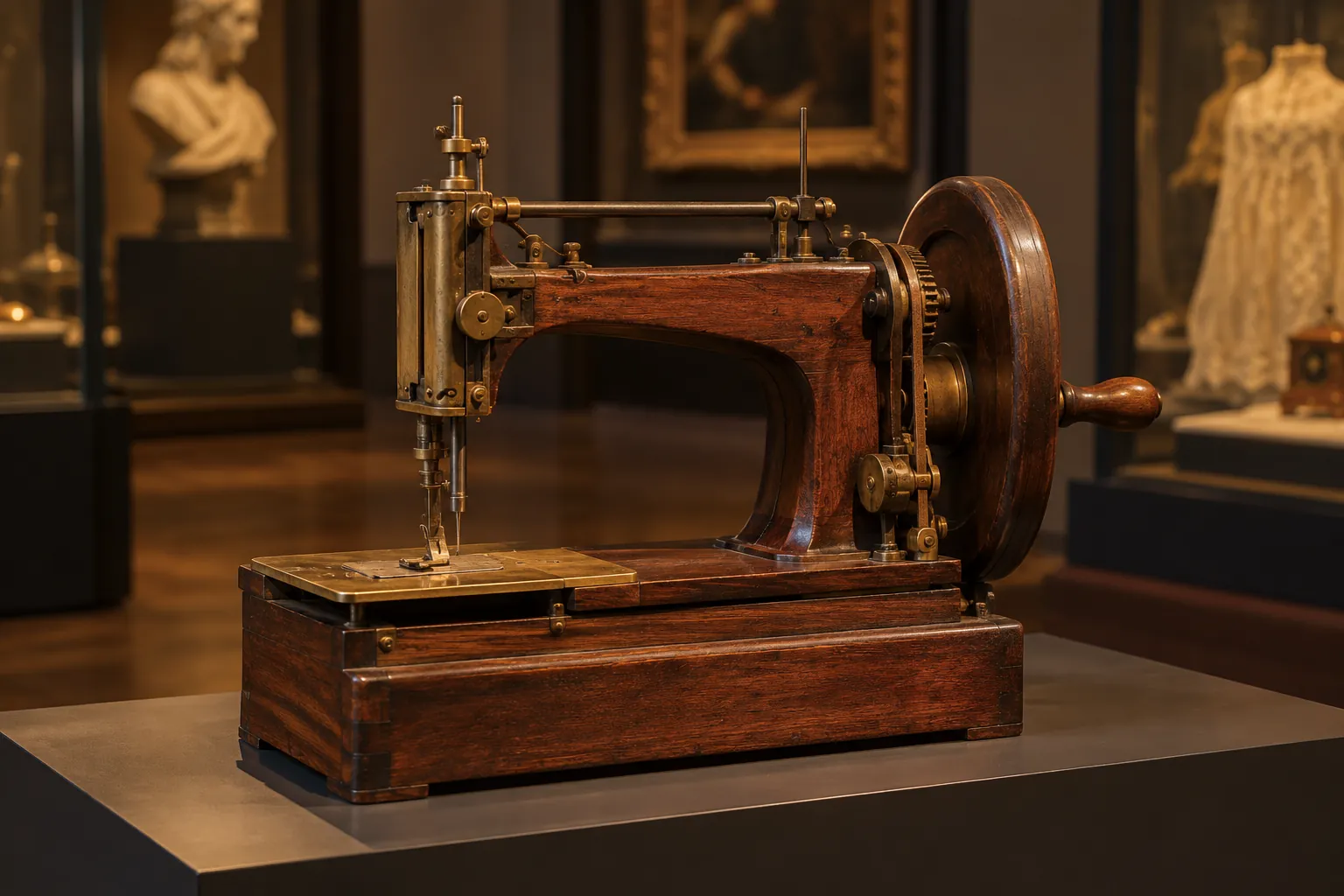
Isaac Merritt Singer patented his machine in 1851 (how it differed from earlier machines) and set up I. M. Singer & Co. in New York with the lawyer Edward C. Clark. Clark’s real contribution was commercial: in 1856 he introduced instalment buying, so a family could take a machine home for a small deposit and pay monthly. Wikipedia credits Singer and Clark with the first hire-purchase arrangement; they also accepted old machines in part exchange.
The partnership was replaced by the Singer Manufacturing Company in the 1860s. The Hagley Library dates the incorporation to 1863, Wikipedia to 1865. Isaac Singer died in Paignton, Devon, on 23 July 1875.
TrademarkThe Red S and the Singer Building
Singer’s own timeline says the red “S” with a seated woman sewing first appeared in 1870; Europeana says it stayed in use until at least 1920. (Singer’s Turkish site gives 1867.) The 41-storey Singer Building in Lower Manhattan, finished in 1908, was briefly the tallest building in the world, from 1908 to 1909. It was demolished between 1967 and 1969.
FactoriesWhere were Singer sewing machines made?
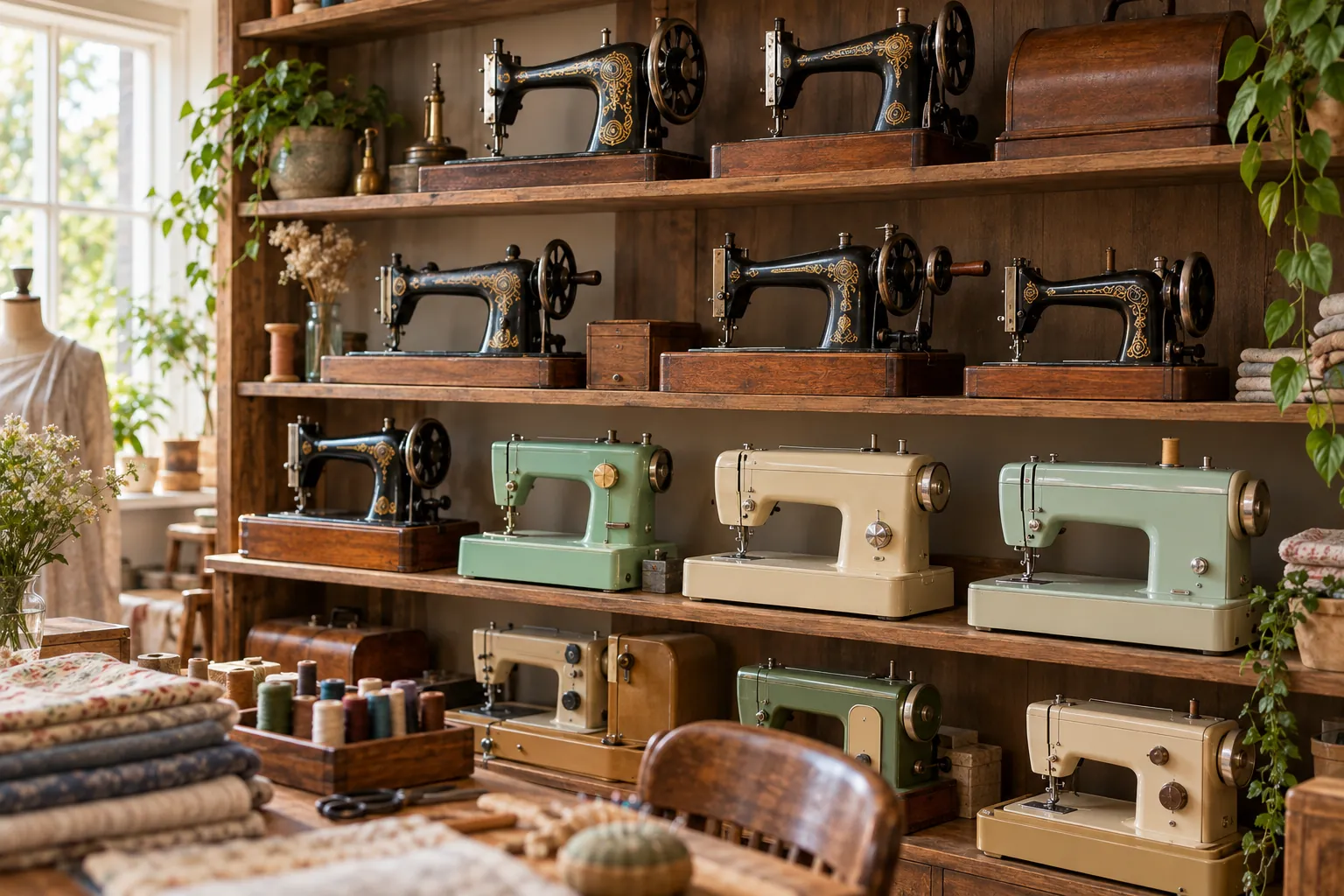
Singer manufactured on three continents. These are the factories that made the domestic machines most people inherit, with the suffix letter each used on its model numbers.
| Factory | Years | Suffix | Known for |
|---|---|---|---|
| Elizabethport, New Jersey, USA | 1872–1982 (closure announced Feb 1982) | none | 15, 66, 201, 221 and most US machines |
| Kilbowie, Clydebank, Scotland | 1884–1980 | K | 66K, 99K, 201K, 222K, 185K |
| St Johns, Quebec, Canada | 1904/1906–1986 | J | 15J, 128J, 185J, tan 221J |
| Anderson, South Carolina, USA | 1951–1988 | A | 301A, 401A, 403A, 500A, 503A |
| Bonnières-sur-Seine, France | 1935–1986 | B | 15B, 191B |
| Monza, Italy | 1935–1992 | M | Italian market models |
| Wittenberge, Germany | 1903/04–1946 | (C series) | German market; later Veritas |
| Podolsk, Russia | 1902–1918 | (none) | Over 675,000 machines a year by 1914 |
Kilbowie was enormous: singersewinginfo puts its average output at 13,000 machines a week and its workforce at over 16,000 in the early 1960s. It was bombed in the Clydebank Blitz in March 1941. Elizabethport, at its height, covered 113 acres. For the exact year and factory of your own machine, look up its serial number or browse the serial number chart.
WartimeSinger in the two world wars
In both wars Singer turned its factories to munitions. singersewinginfo records that Elizabethport made 75mm cannons and .45 pistols in the First World War, and stopped making domestic sewing machines entirely from June 1942 to July 1945. That gap matters when you date a machine: serial numbers allotted just before the war could be stamped on machines finished years later.
After 1960What happened to Singer?
The company was renamed The Singer Company in 1963 and diversified far beyond sewing. Its factories closed one by one: Kilbowie in 1980, Elizabethport (announced) in 1982, and Anderson was sold to Ryobi in 1988. The sewing business was spun off as SSMC in 1986, and the shrunken parent was renamed Bicoastal Corporation in 1989.
In 2004 Kohlberg & Company bought Singer for $134 million and merged it with VSM (Husqvarna Viking and Pfaff) to form SVP Worldwide in 2006. SVP was sold to Ares Management in 2018 and to Platinum Equity in 2021, and is based in Nashville, Tennessee. Singer today does not value or date vintage machines; it refers owners to collectors’ resources.
IdentificationBadges, emblems and the “Simanco” mark
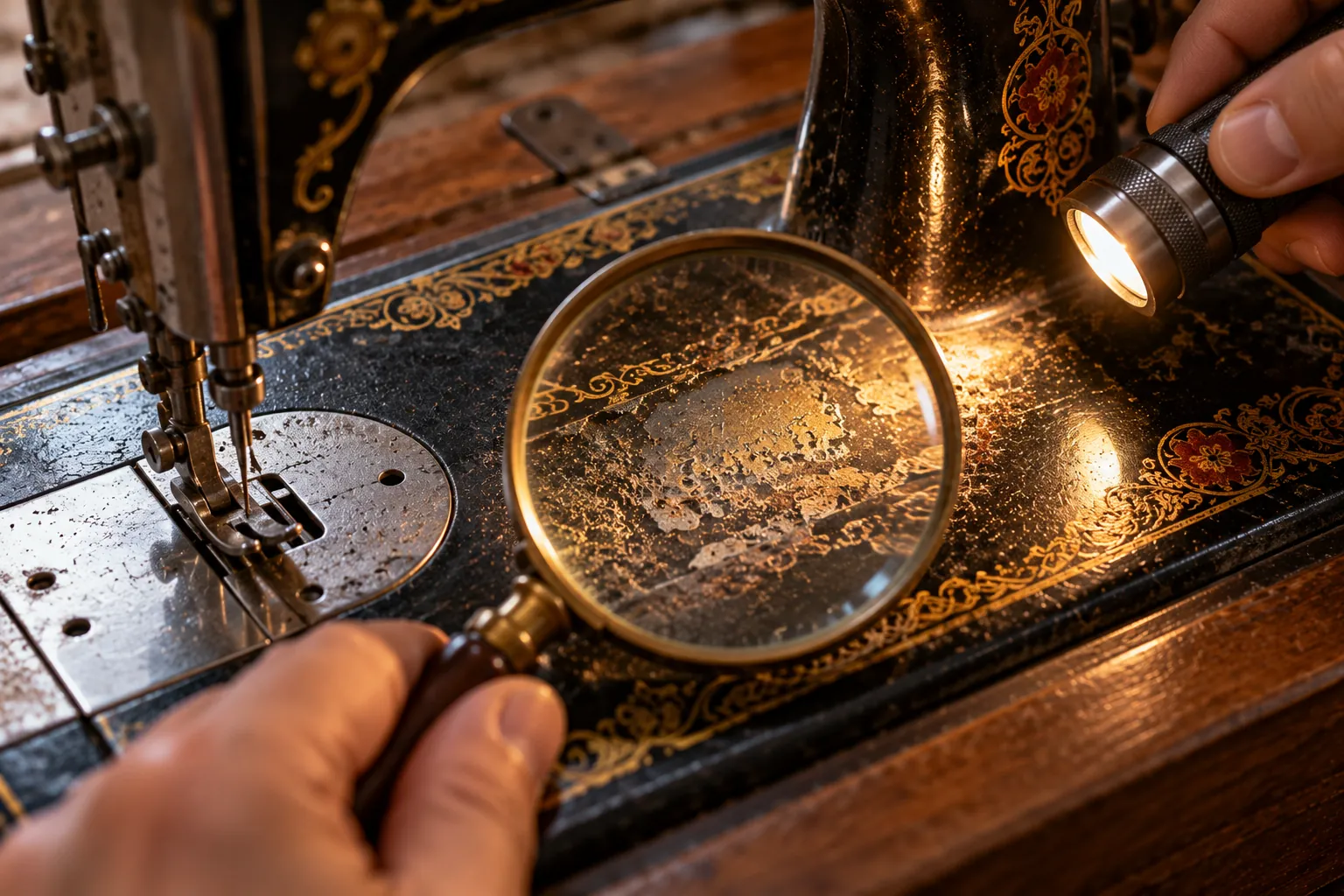
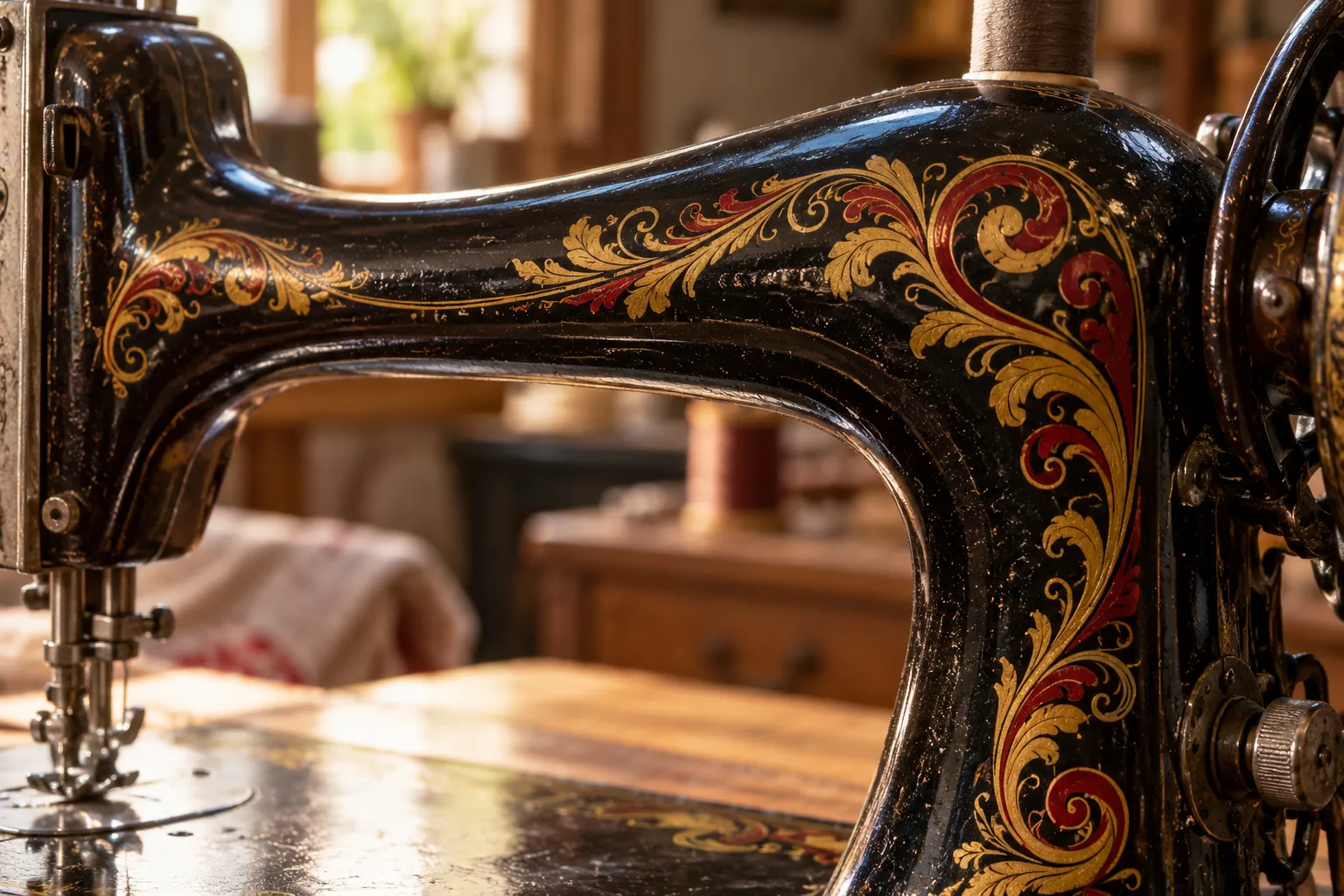
Vintage Singers carry a round or oval brass medallion (badge) on the front of the arm. Its design changed over time and is one more clue to age, alongside the decals and the serial number. Original Singer parts are often stamped “SIMANCO”, short for Singer Manufacturing Company.
QuestionsFrequently asked questions
Where are Singer sewing machines made today?
Singer is now owned by SVP Worldwide and new machines are made by contract manufacturers in Asia. Vintage machines were made in the US, Scotland, Canada, France, Germany, Italy and Russia.
When did Singer stop making sewing machines in the USA?
There is no single date. Elizabethport’s closure was announced in February 1982, and the Anderson, South Carolina plant was sold to Ryobi in 1988.
What does the K mean on a Singer model number?
K means the machine was made at Kilbowie, Clydebank, Scotland, for example 66K, 99K, 201K and 222K.
Who owns Singer now?
SVP Worldwide, which also owns Pfaff and Husqvarna Viking. It was acquired by Platinum Equity in 2021.
Was Isaac Singer the inventor of the sewing machine?
No. He patented an improved, practical design in 1851; earlier machines were made by Saint, Thimonnier, Hunt and Howe.
ReferencesSources
These are the pages and manuals the facts in this article come from. Where they disagree, we say so in the text.
- en.wikipedia.org/wiki/Singer_Corporation
- findingaids.hagley.org/repositories/3/resources/987
- en.wikipedia.org/wiki/Isaac_Singer
- www.singer.com/pages/singer-history
- www.europeana.eu/en/stories/singer-sewing-machines
- en.wikipedia.org/wiki/Singer_Building
- www.singersewinginfo.co.uk/history/factories/elizabethport
- www.singersewinginfo.co.uk/history/factories/kilbowie
- www.singersewinginfo.co.uk/history/factories/stjohns
- www.singersewinginfo.co.uk/history/factories/anderson
- www.singersewinginfo.co.uk/history/factories/bonnieres
- www.singersewinginfo.co.uk/history/factories/monza
- www.singersewinginfo.co.uk/podolsk
- en.wikipedia.org/wiki/SVP_Worldwide
Published 24 October 2026 · Written and fact-checked by the HeirloomID editors. Spotted an error? Tell us.