Key points
- Serial number first: it gives the year the number block was allotted and the factory.
- Allotment date is not manufacture date; machines could be finished months or years later.
- The model tells you a production range; decals and features confirm the decade.
- Singer itself no longer dates machines for owners; collectors’ ledgers are the record.
Method 1Date it by serial number
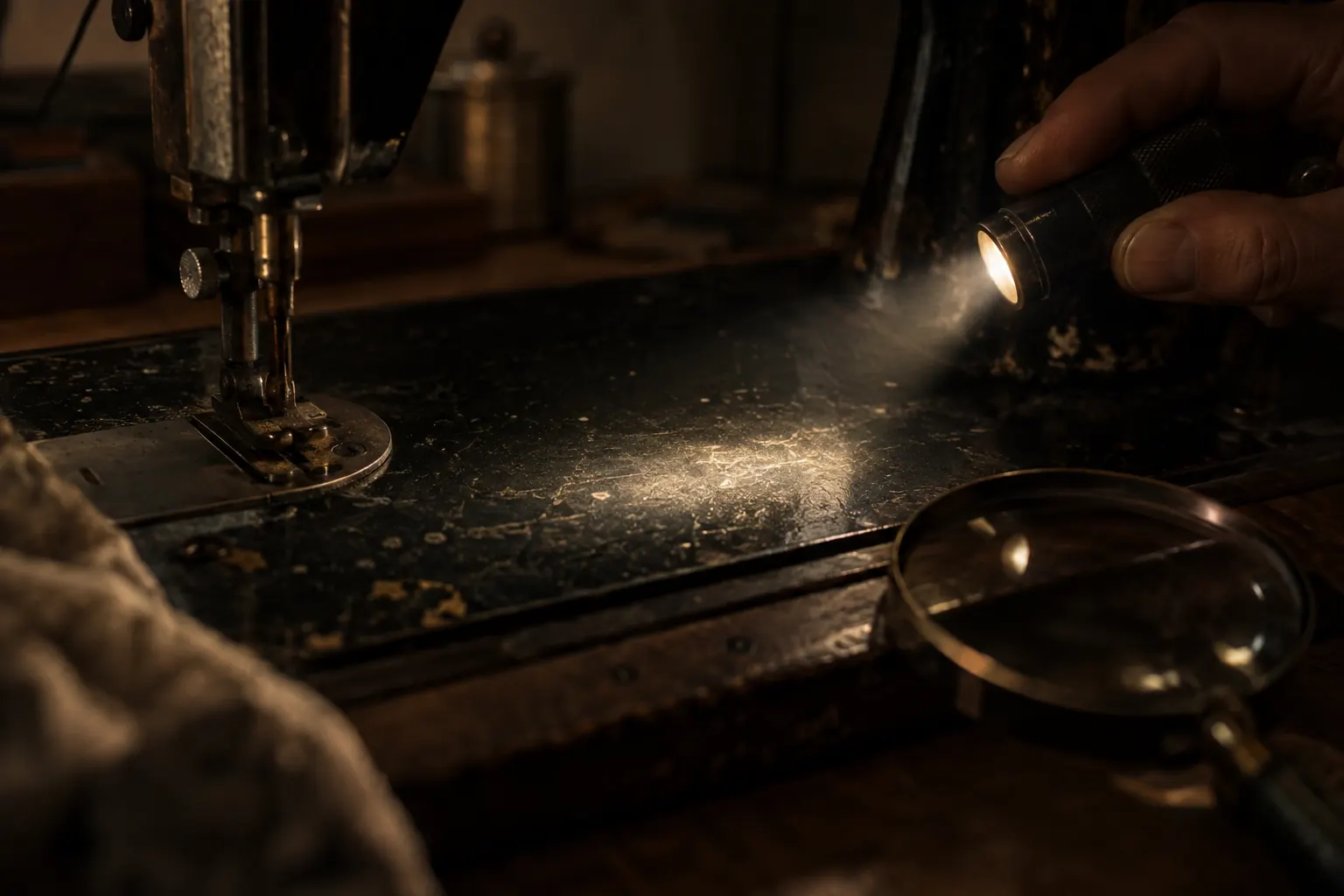
Singer stamped a serial number into the cast bed of almost every machine. From about 1900 it is one or two letters followed by digits (for example G1234567 or AK123456); before that it is digits only. Enter it in our serial number lookup and you get the block it falls in, the dates that block was allotted and the factory. The serial number chart shows every prefix.
ISMACS stresses that these are the dates the numbers were allotted, not the date each machine was made. Can’t find it? See eight reasons and fixes.
Method 2Identify the model
A model gives a production window. Identify yours with our model identifier: the bobbin (long shuttle, drop-in Class 66, Class 15 in a case, or round Featherweight bobbin), the size of the bed and the needle angle. A slant needle, for example, means 1951 or later. Then compare with Singer models by decade.
Method 3Read the decals and badge
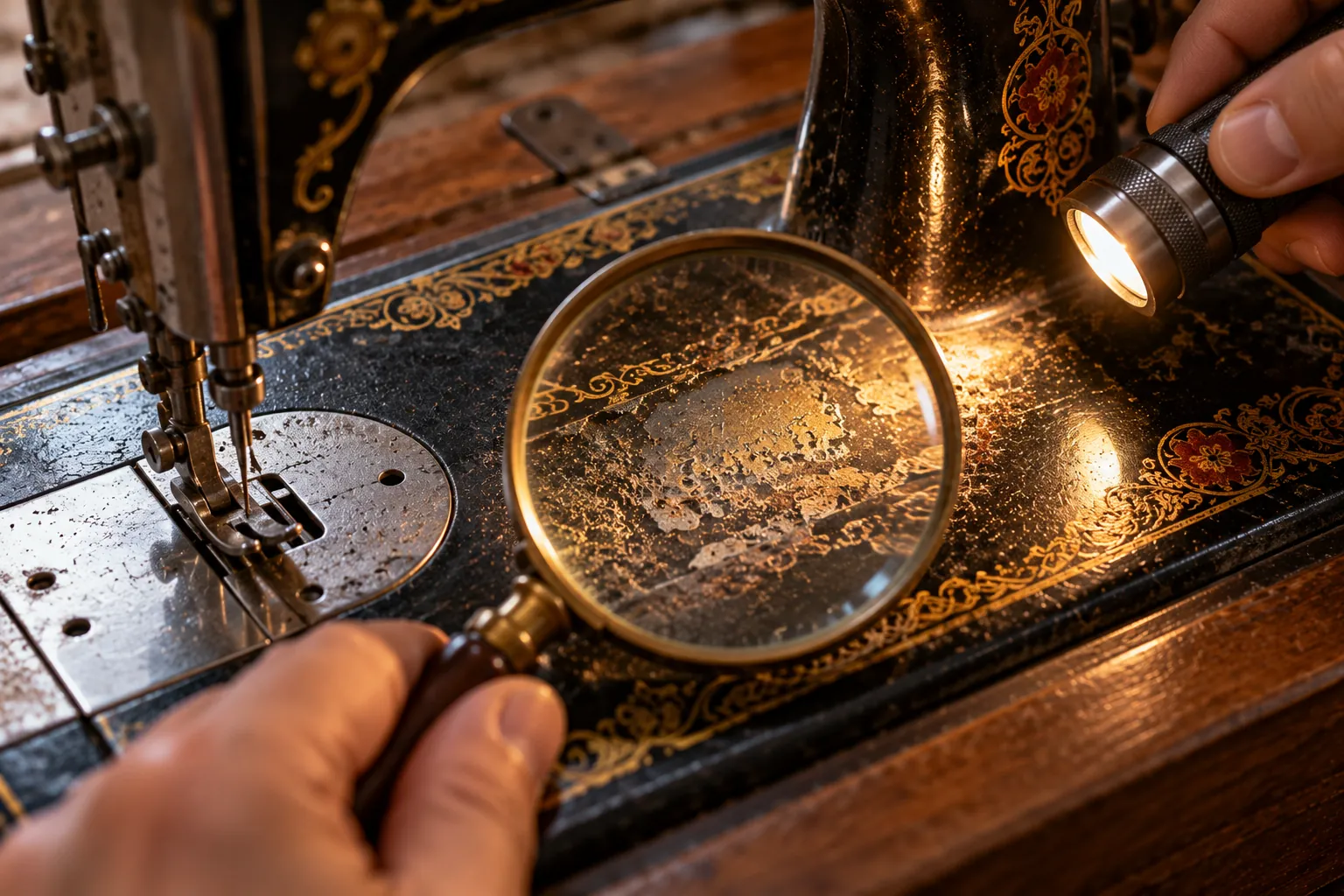
Singer used decal patterns such as Sphinx, Red Eye, Tiffany, Filigree and Gingerbread for known periods. Our decal guide shows them. The brass badge on the arm changed design over time too. Decals are good for a decade, not a year.
Method 4Check features: power, finish and motor
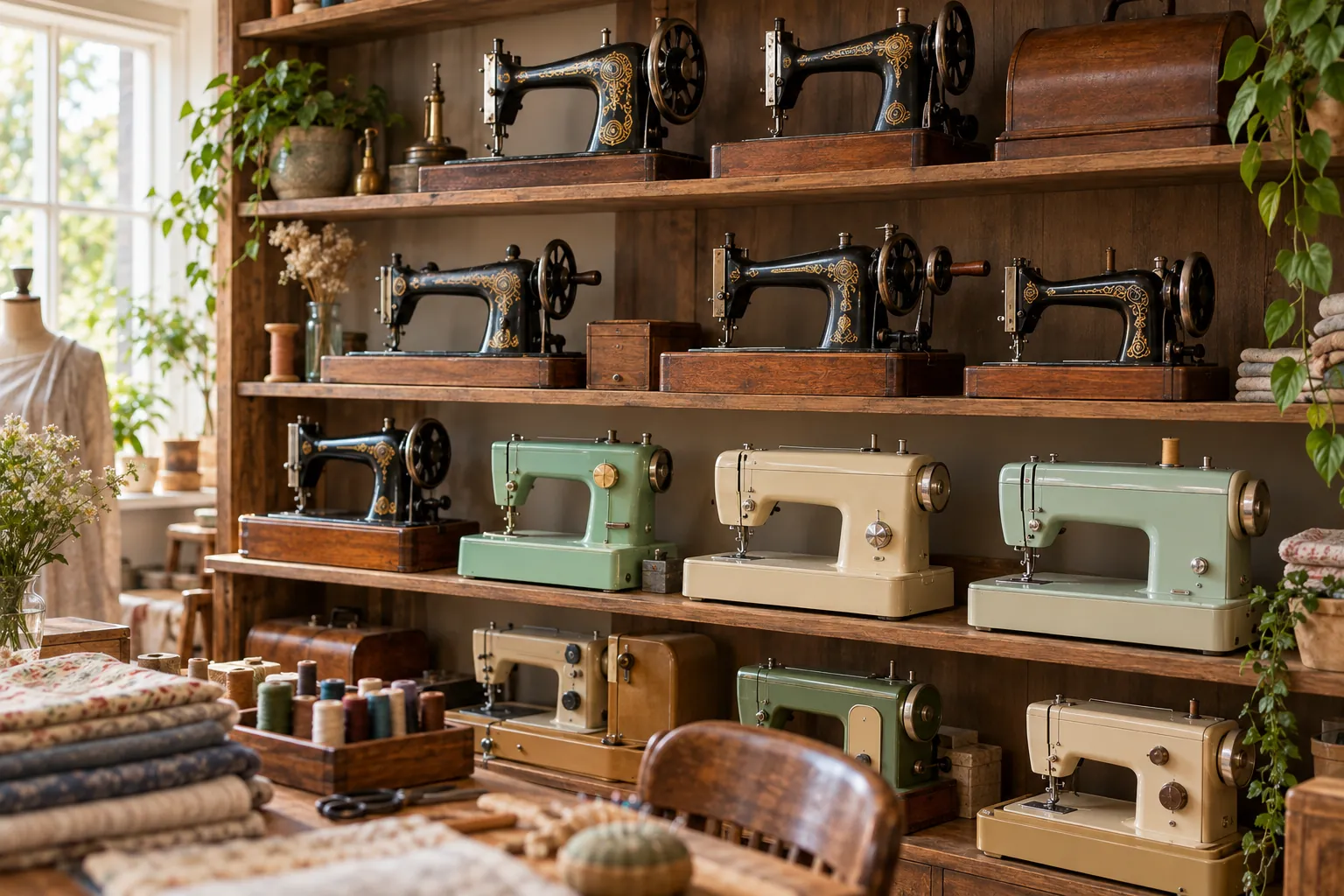
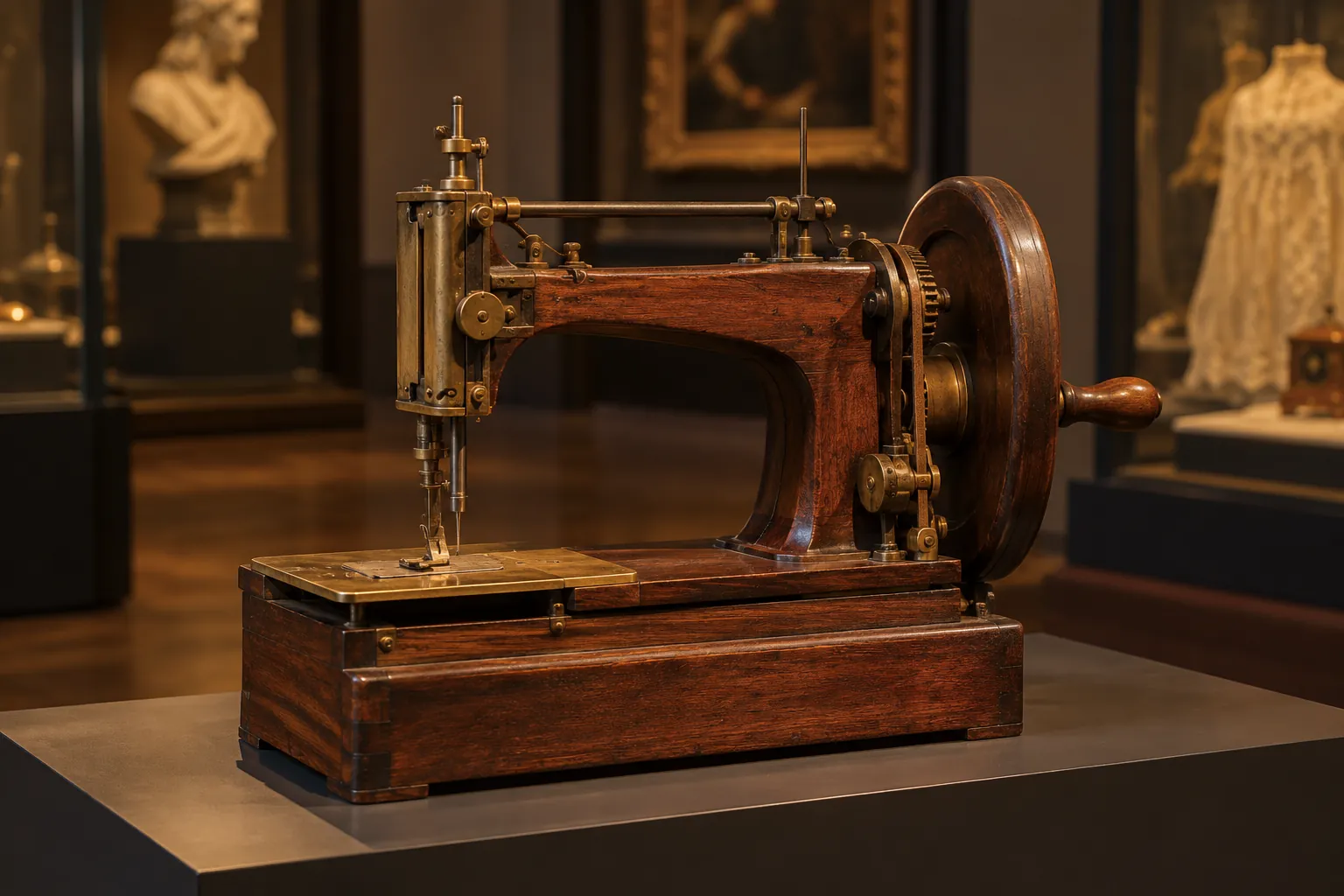
- Treadle or hand crank only, no motor mounts: usually before the 1920s.
- External motor and knee lever: common from the 1920s.
- Potted motor in the back of the pillar (15-91, 201-2): 1930s onwards.
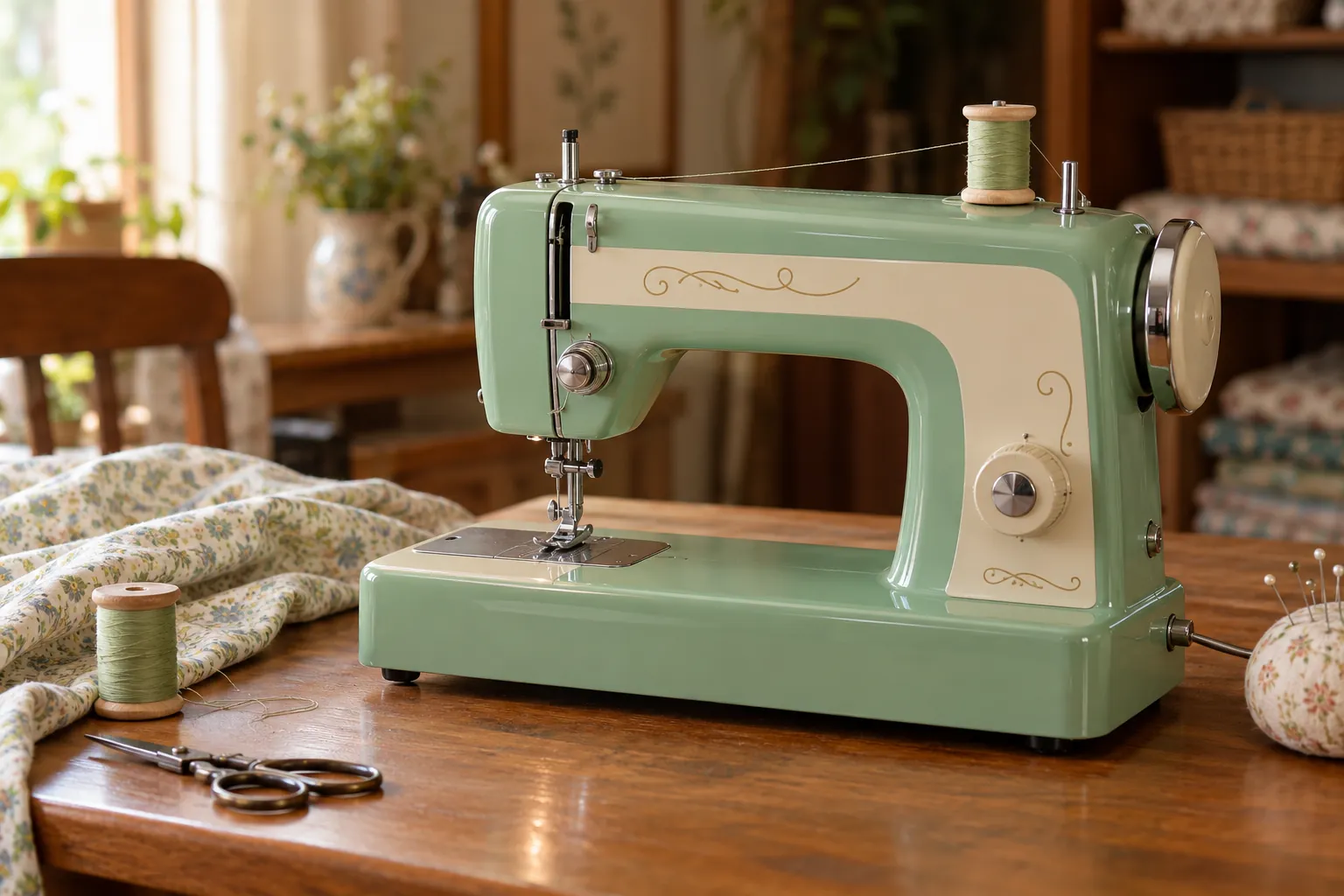
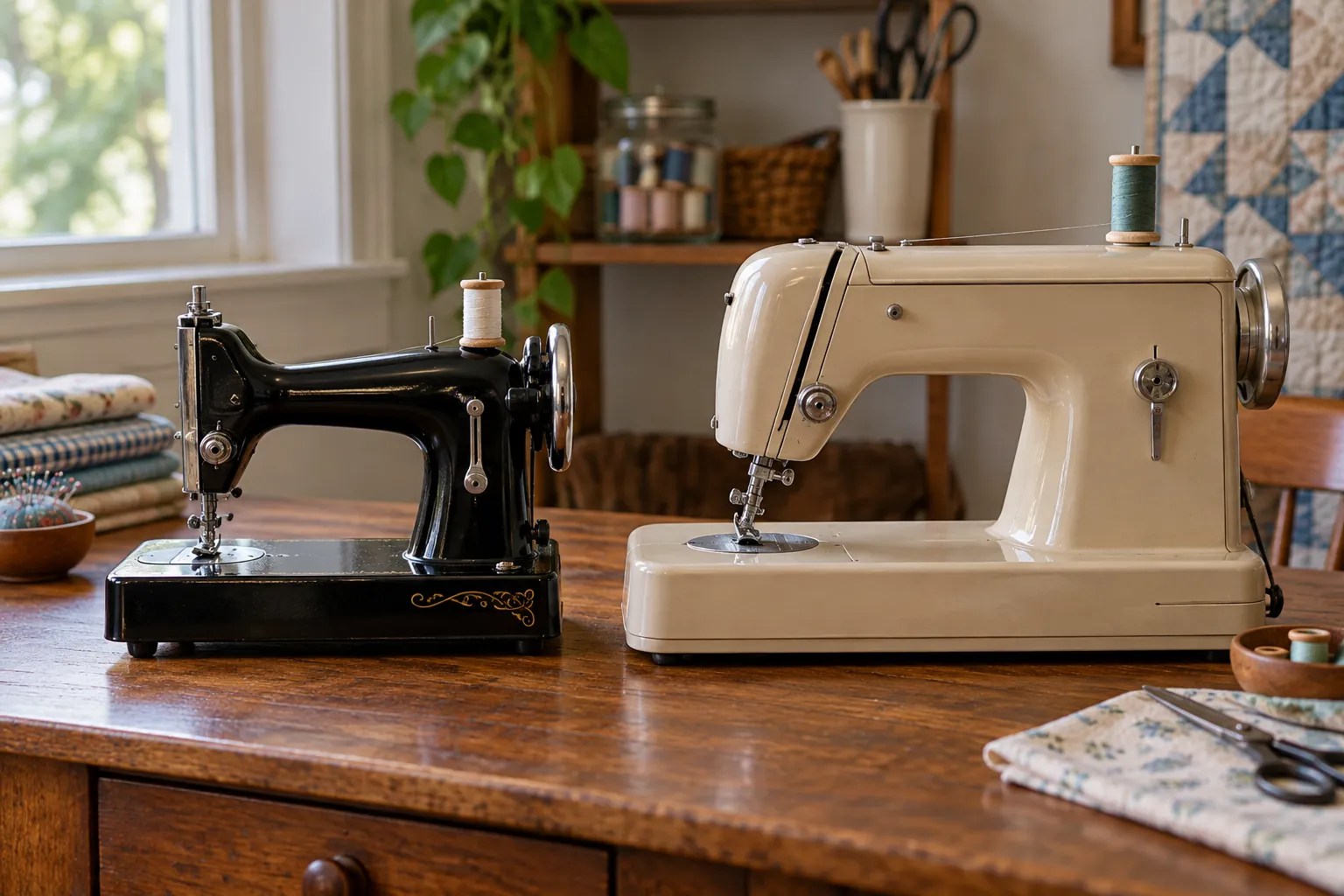
- Beige, tan, two-tone or green finish: 1950s–1960s.
- Plastic covers and push-button bobbin: mid-1960s and later.
LimitsWhat dating can’t tell you
For some factories, such as St Johns (Canada) or Bonnières (France), detailed ledgers are not published, so only a prefix period is known. Wartime backlogs mean a 1941 number could be on a machine finished later. And cabinets, motors and attachments were often swapped, so date the head, not the furniture.
QuestionsFrequently asked questions
How do I find out how old my Singer sewing machine is?
Find the serial number on the bed and look it up. It gives the allotment year and factory. Confirm with the model and decals.
Can I find my Singer model by serial number?
The serial number tells you the year and factory, and which models were in production then. Confirm the model by its bobbin and features.
Where is the model number on an old Singer?
Many old Singers do not show a model number. It is usually identified from the bobbin type, size and features.
What does a G series Singer serial number mean?
A single G prefix is an early 1900s Elizabethport allotment; look it up for the exact block and dates.
Can Singer tell me how old my machine is?
Singer no longer publishes dating information. Collectors’ transcriptions of its ledgers, used by our lookup, are the best record.
ReferencesSources
These are the pages and manuals the facts in this article come from. Where they disagree, we say so in the text.
- ismacs.net/singer_sewing_machine_company/singer_dating_by_serial_number.html
- ismacs.net/singer_sewing_machine_company/singer_manufacture_dates_by_serial_number.html
- sewalot.com/dating_singer_sewing_machine_by_serial_number.htm
- www.singersewinginfo.co.uk/serial_numbers
- ismacs.net/singer_sewing_machine_company/decals/domestic-decals.html
- ismacs.net/faq.html
Published 24 October 2026 · Written and fact-checked by the HeirloomID editors. Spotted an error? Tell us.