Key points
- Good for denim, canvas, sailcloth repairs and soft, thin leather.
- Leatherworkers put the practical limit of a 15-91 at around 8 oz leather with #69 thread.
- Use a leather-point needle (size 16 or 18), longer stitches and slow speed.
- Sticky vinyl and soft leather feed better with a walking foot.
- The Singer 31-15 is a tailor’s industrial machine, not a heavy leather machine.
Short answerWhat can a vintage Singer sew?
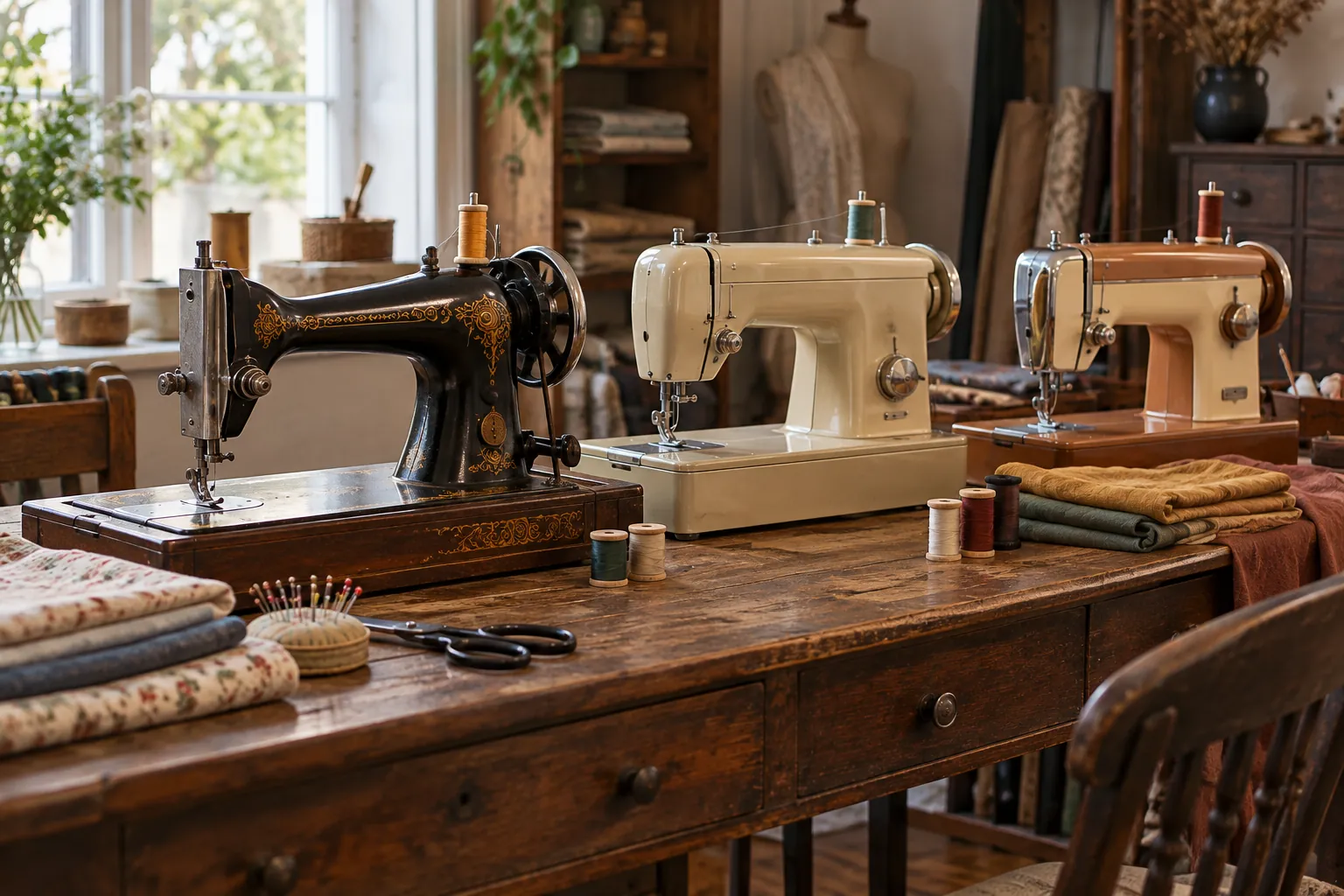
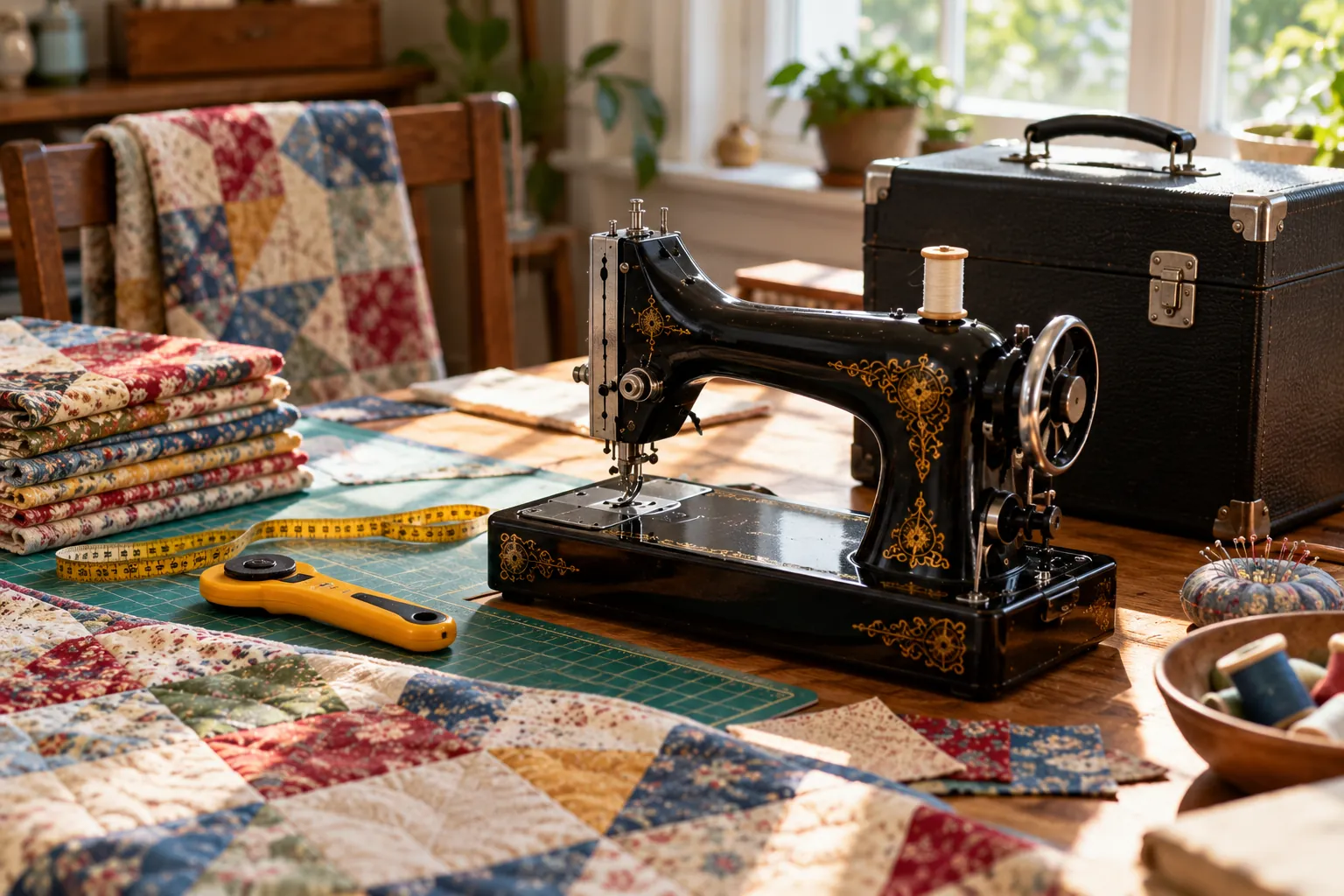
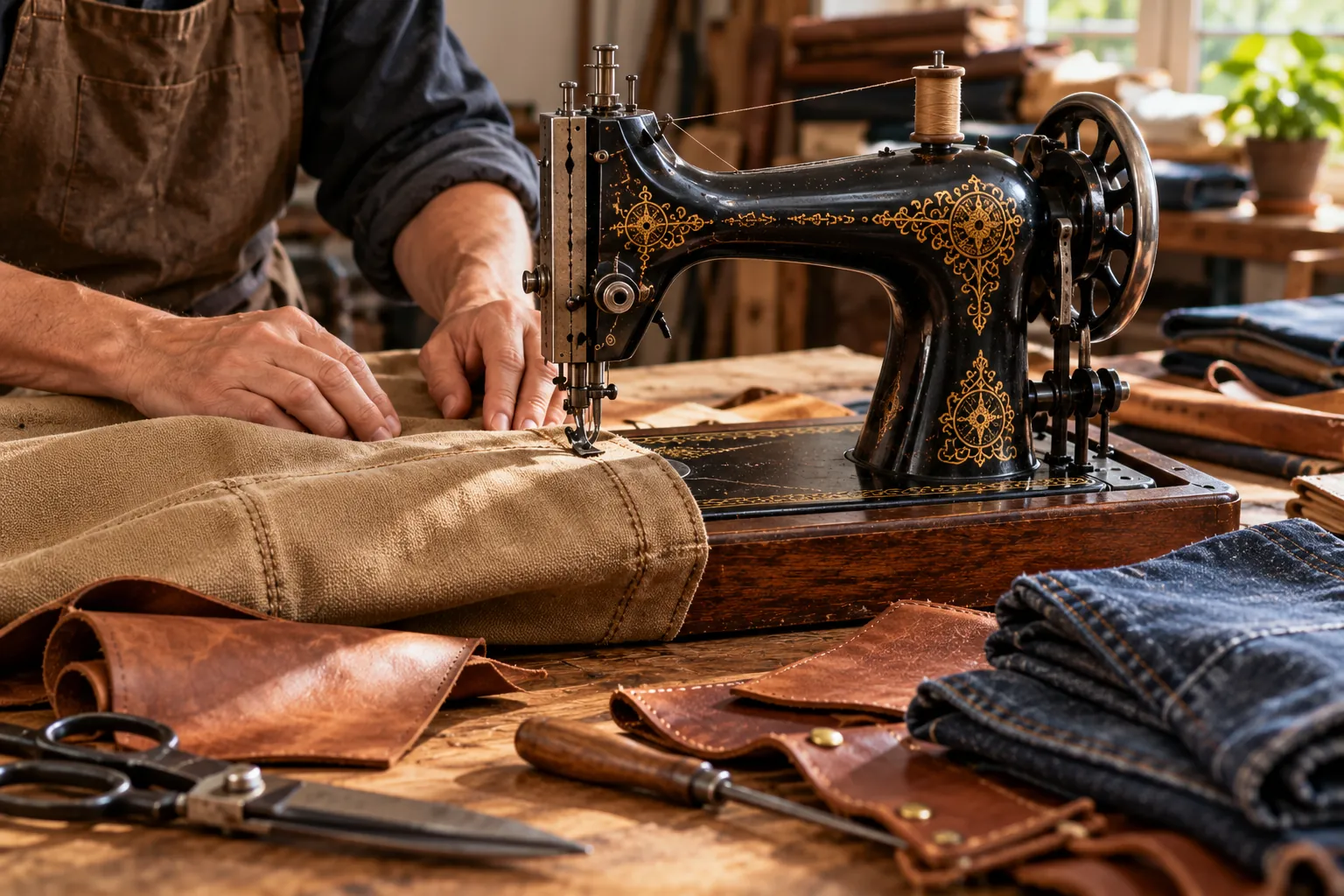
Strong, gear-driven household machines handle heavy cloth better than most modern domestic machines. Wizcrafts says the 15-91 can sew cloth and denim over 5/16 inch thick with the standard foot. A boat owner on a sailing forum reports a 201K stitching five layers of 10 oz sailcloth. ISMACS notes the 201’s gear drive and internal motor make it very strong.
Leatherworkers are more cautious. On leatherworker.net, users say the 15-91 will sew “up to about denim” and very thin leathers but not 12 oz; one owner’s machine maxed out at about 8 oz leather with #69 bonded thread and a size 16 or 18 leather-point needle.
HowTips for heavy fabric and leather
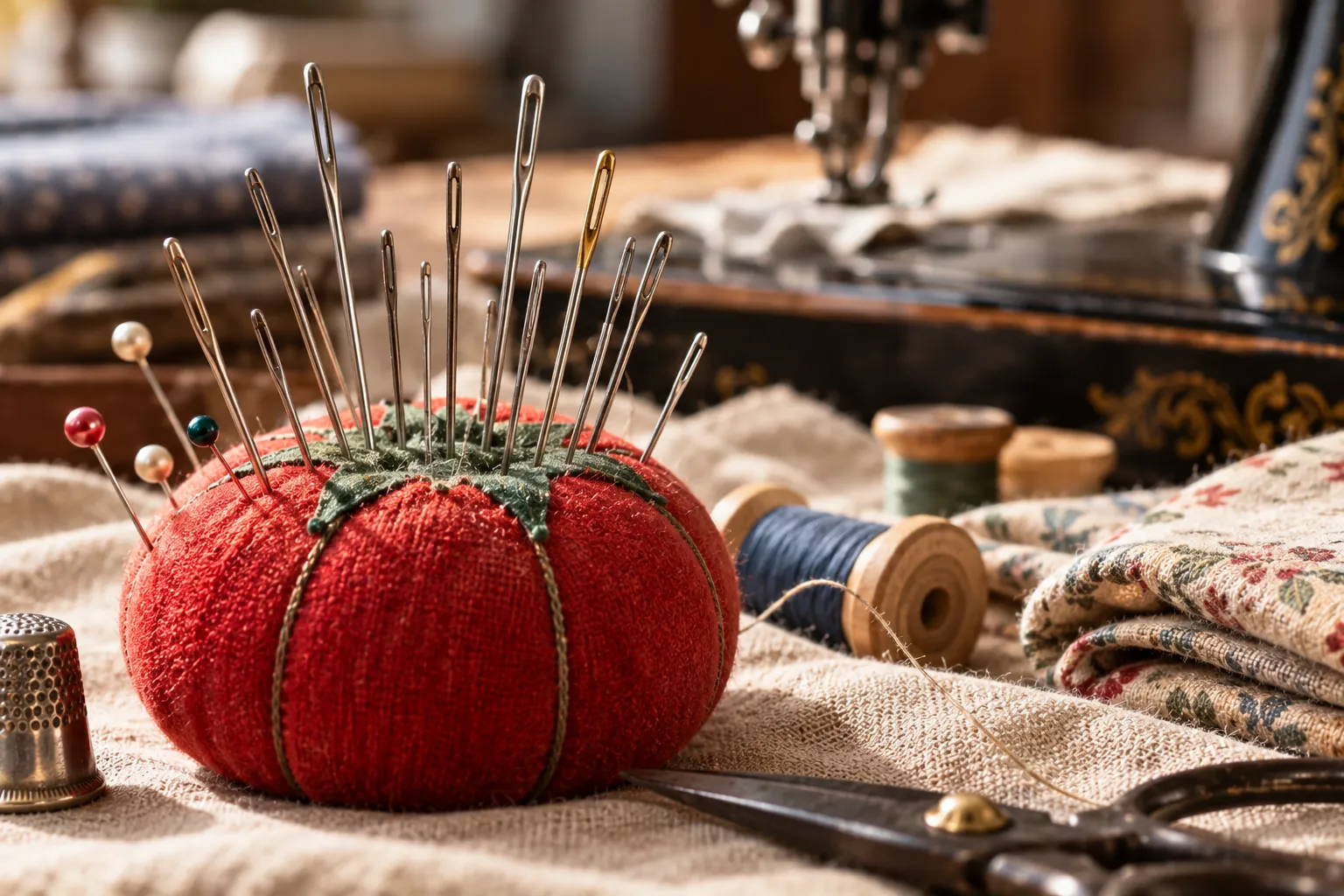
- Needle: a jeans/denim needle for denim and canvas; a leather-point needle for leather. Size 16 or 18. See needles for vintage Singers.
- Thread: no heavier than about #69 bonded thread on a household machine.
- Feet: a walking foot helps with sticky vinyl and soft leather; see feet and attachments.
- Speed: slow; turn the handwheel by hand over thick seams.
- Tension and stitch length: longer stitches, and adjust tension on a test piece.
LimitsWhen you need an industrial machine
For belts, holsters, saddlery and thick upholstery leather, leatherworkers recommend a true walking-foot industrial machine. Forcing a household machine through thick leather strains the motor, timing and gears. The Singer 31-15, often mentioned as a vintage option, is described by its owners as a tailoring machine that only sews light leather.
QuestionsFrequently asked questions
Can a Singer 15-91 sew leather?
Thin, soft leather, yes, with a leather needle and slow speed. Leatherworkers put its limit around 8 oz leather.
Can a vintage Singer sew denim?
Yes. The 15-91, 201, 66 and 301 sew denim well with a denim needle.
Is the Singer 201 a heavy-duty machine?
It is strong for a household machine thanks to its gear drive, but it is not an industrial machine.
What is the best vintage Singer for leather?
For thin leather, a gear-driven 15-91 or 201. For heavy leather, an industrial walking-foot machine.
ReferencesSources
These are the pages and manuals the facts in this article come from. Where they disagree, we say so in the text.
- www.wizcrafts.net/crafts/singer15-91.html
- leatherworker.net/forum/topic/69317-singer-model-15-91good-for-leather-work
- leatherworker.net/forum/topic/62498-singer-15-91
- forums.ybw.com/threads/which-singer-201.613588
- ismacs.net/singer_sewing_machine_company/singer-class-201-sewing-machines.html
- leatherworker.net/forum/topic/62885-31-15-users-do-you-use-a-motor-or-the-treadle-and-how-about-needles
Published 24 October 2026 · Written and fact-checked by the HeirloomID editors. Spotted an error? Tell us.