Key points
- Rethread before touching any dial.
- Tension only works with the presser foot down; thread with it up.
- Upper dial: higher numbers, tighter; turn clockwise to increase on the 201.
- Bobbin case screw: righty-tighty, 1/8 turn or less at a time.
- Featherweight bobbin cases are typically set around 23 g.
FirstRule out threading
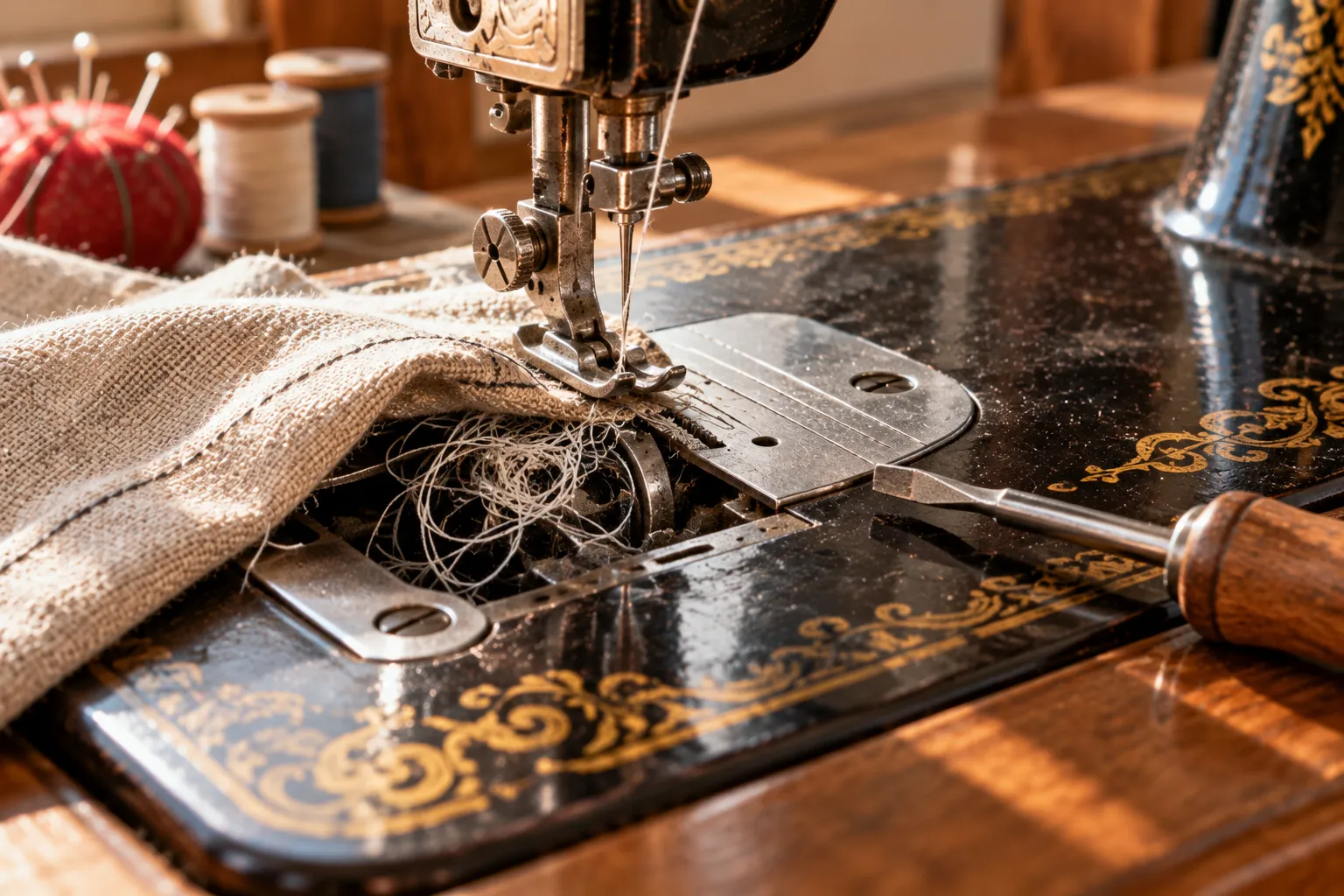
Rethread the machine with the presser foot raised and the take-up lever at its highest point (see threading). Check the needle is new, the right way round and the right size, and that the bobbin is evenly wound and inserted correctly. Lint under the tension discs or in the bobbin case also upsets the stitch.
The testSew a two-colour test seam
singersewinginfo recommends contrasting colours top and bottom, but threads of the same type and weight. Sew on two layers of the fabric you plan to use. A balanced stitch has the two threads locking in the middle of the fabric.
| What you see | Meaning | Fix |
|---|---|---|
| Loops or nests of top thread on the underside | Upper tension too loose (or missed the discs) | Rethread; then tighten the upper dial |
| Bobbin thread pulled up to the top | Upper tension too tight | Loosen the upper dial |
| Top thread lies straight along the surface | Upper tension too heavy (201 manual) | Loosen the upper dial |
| Puckered seam | Both tensions too tight, or stitch too short | Loosen slightly; lengthen stitch |
Upper tensionAdjusting the upper tension dial
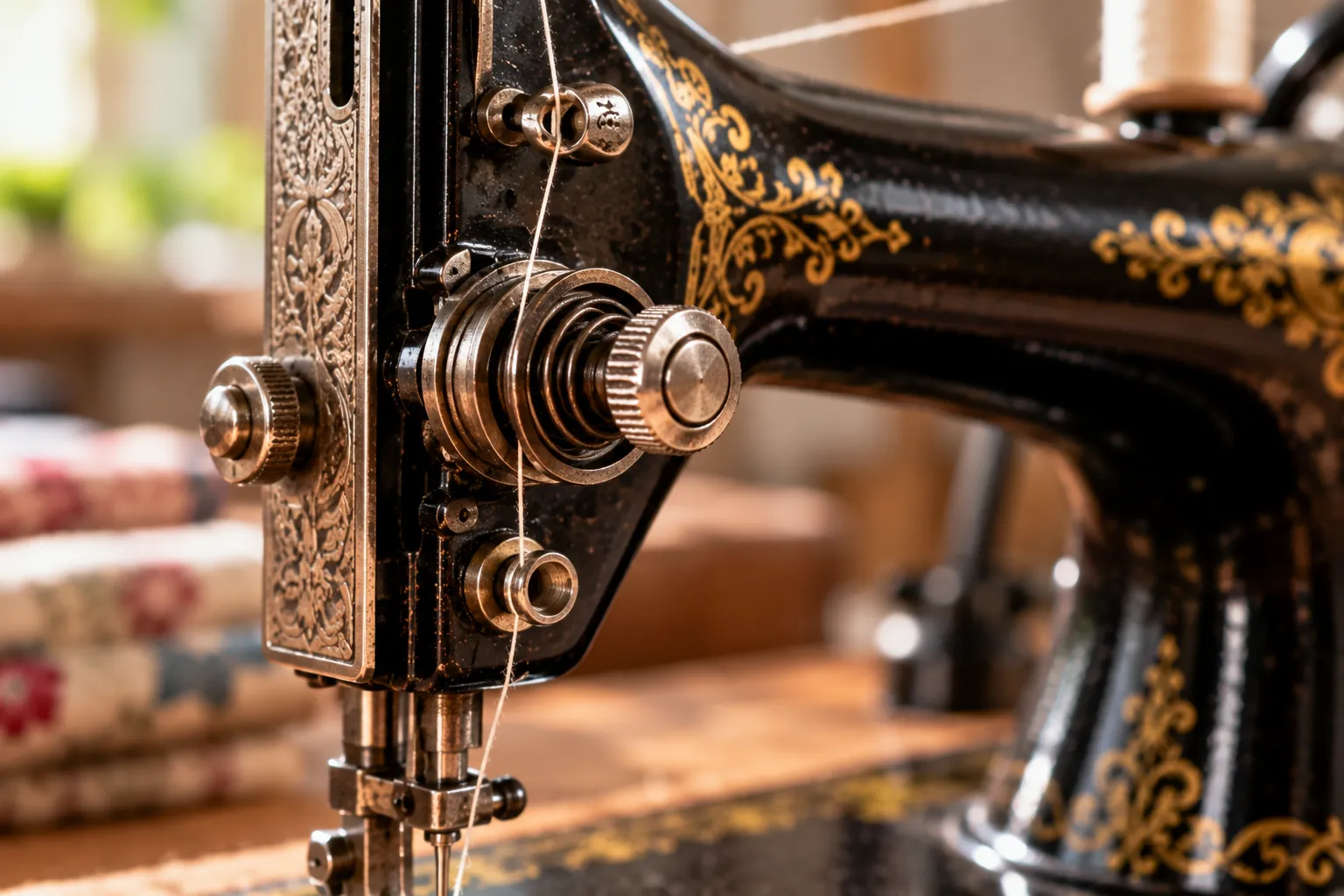
The dial on most vintage Singers is numbered 0 to 9. The 201 manual says to turn the thumb nut gradually to the right (clockwise) to increase tension; the 15-88/89 manual describes turning it over towards you to increase. Make small changes and test after each. The manuals stress the tension can only be tested with the presser foot down.
On a Featherweight you can recalibrate the dial: singer-featherweight.com explains pressing in the numbered dial only and turning it until 4 is at the top, which moves the numbers without changing the tension.
Bobbin tensionAdjusting the bobbin case
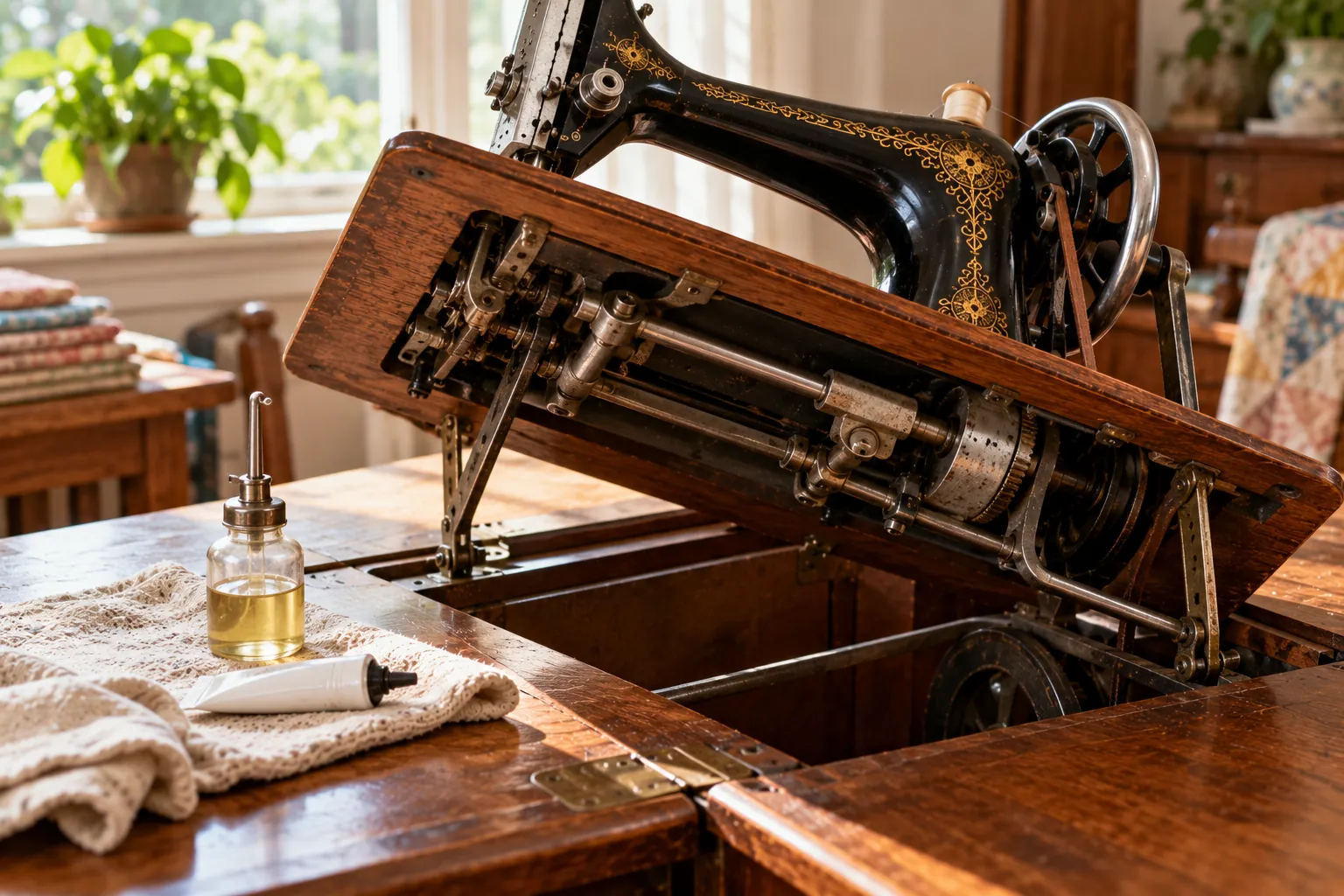
Only adjust the bobbin case if the upper dial cannot balance the stitch. Turn the small screw on the tension spring: right to tighten, left to loosen. singer-featherweight.com says most adjustments need 1/8 of a turn or less, and Threads Magazine says never more than a quarter turn between tests. singer-featherweight.com puts the correct bobbin tension for a Featherweight at around 23 g, measured with a bobbin tension gauge. The 201 manual notes that once the bobbin tension is right it rarely needs changing.
QuestionsFrequently asked questions
Why is my Singer looping underneath?
Usually the top thread missed the tension discs. Rethread with the presser foot up, then tighten the upper tension if needed.
What number should the tension be on a vintage Singer?
There is no fixed number; many machines sew balanced around the middle of the 0–9 dial. Use a test seam.
Should I adjust the bobbin tension?
Only after rethreading and adjusting the upper dial, and only in tiny turns.
Which way do I turn the tension dial to tighten?
On the 201, clockwise (to the right). Higher numbers mean more tension.
ReferencesSources
These are the pages and manuals the facts in this article come from. Where they disagree, we say so in the text.
- ismacs.net/needlebar/main/manuals/singer201/index3.html
- ismacs.net/singer_sewing_machine_company/manuals/singer-model-15-88-89-sewing-machine-manual.pdf
- ismacs.net/needlebar/main/15chart/110/index2.html
- singer-featherweight.com/blogs/schoolhouse/how-to-adjust-tension
- www.threadsmagazine.com/2008/11/02/understanding-thread-tension
- singersewinginfo.co.uk/sewingtest
- sewguide.com/thread-bunches-up-under-the-fabric
Published 24 October 2026 · Written and fact-checked by the HeirloomID editors. Spotted an error? Tell us.