Key points
- Thread bunching underneath: rethread the top with the foot up.
- Skipped stitches: new needle, correct way round, fully up.
- Stiff or seized: clean, kerosene and gentle heat; never force it (ISMACS).
- Handwheel turns but needle doesn’t: tighten the stop-motion knob.
- Timing, wiring and motor faults are jobs for a technician.
Quick fixesCommon problems at a glance
| Problem | Most likely cause | Fix |
|---|---|---|
| Thread bunches or nests under fabric | Top thread missed tension discs or take-up lever | Rethread with foot up and lever high |
| Skipped stitches | Bent, blunt or wrongly inserted needle | New needle, correct direction, pushed fully up |
| Top thread breaks | Tension too tight, wrong needle, burr on plate or foot | Check needle and tension; inspect needle hole |
| Needle breaks | Pulling fabric, loose foot, wrong attachment | Let feed dogs pull; tighten foot; turn by hand to check |
| Loops on the underside | Upper tension loose, lint, overfilled bobbin | Rethread, clean, tension test |
| Stiff, noisy or slow | Lint and dried oil | Clean and oil every point |
| Won’t turn (seized) | Gummed old oil | Kerosene, gentle heat, patience |
| Motor runs, needle doesn’t move | Stop-motion knob loose (after bobbin winding) | Tighten the knob in the handwheel |
| Fabric won’t feed | Lint under feed dogs, stitch length at zero, foot pressure | Clean, set stitch length, check foot |
| Machine runs slowly | Belt too tight, dry bearings | Slacken belt, oil |
Causes are drawn mainly from the troubleshooting table in the Singer 221K manual and from Sewguide on thread bunching.
Problem 1Thread bunching under the fabric
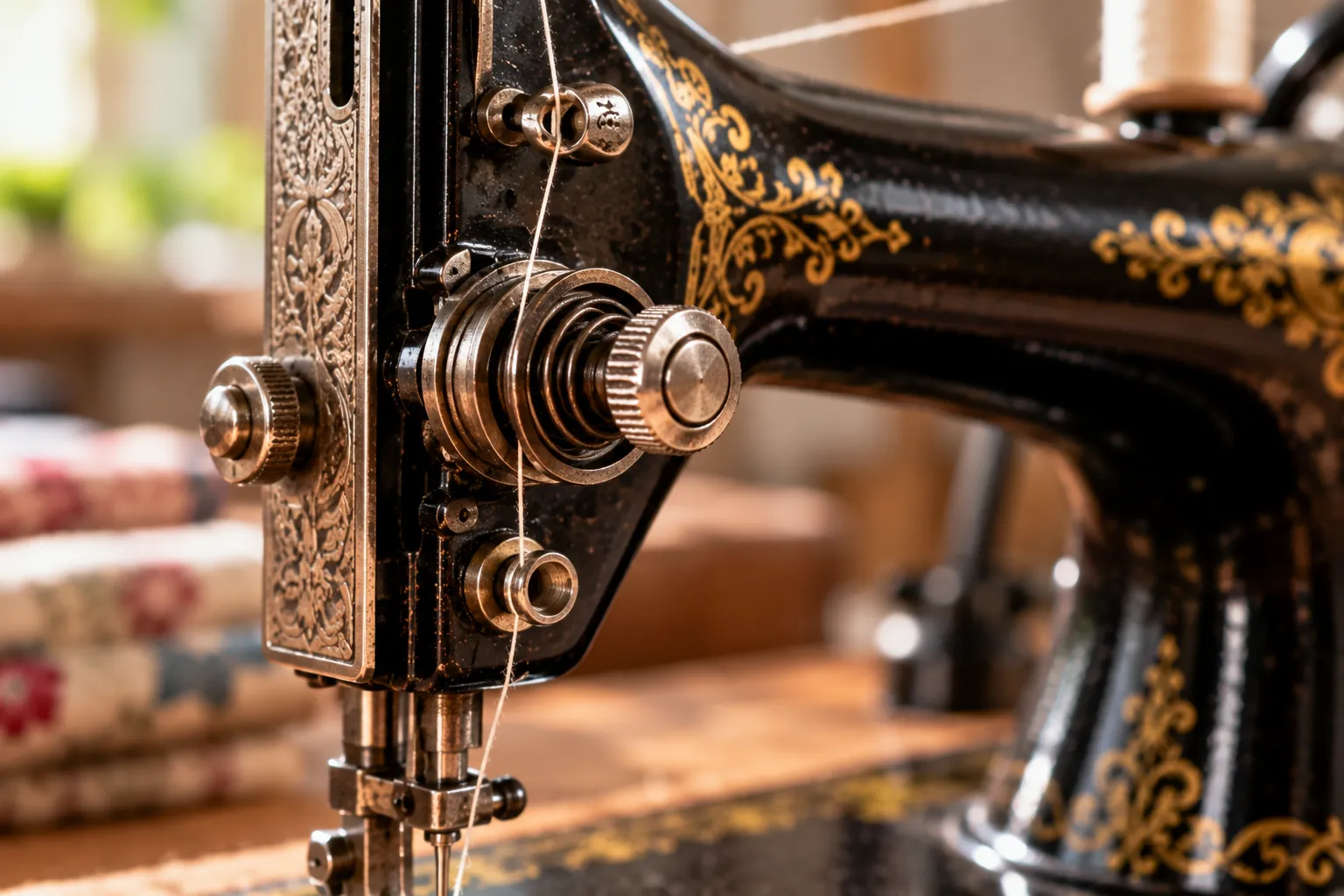
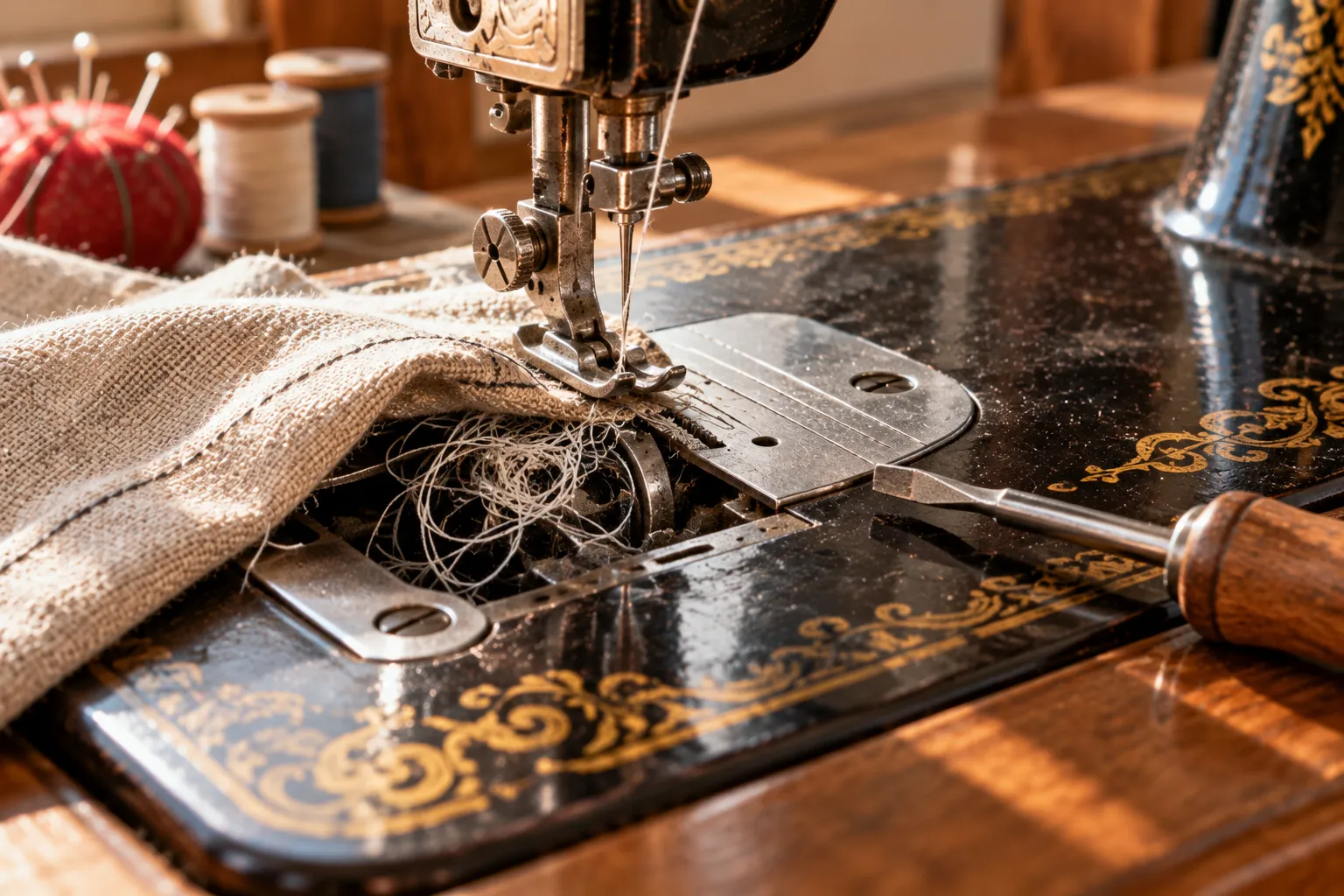
Sewguide calls incorrect threading the number one reason for thread bunching. Rethread the top completely with the presser foot up so the thread sits between the tension discs, and with the take-up lever at its highest point. Then sew a test and adjust tension if needed (how).
Problem 2Skipped stitches
The 221K manual says the needle might be bent: replace it with one of the proper class and size, inserted correctly, and check the threading. Each model has a set needle direction (table). Holding the fabric firmly near the needle helps on stretchy fabrics.
Problem 3A stiff or seized machine
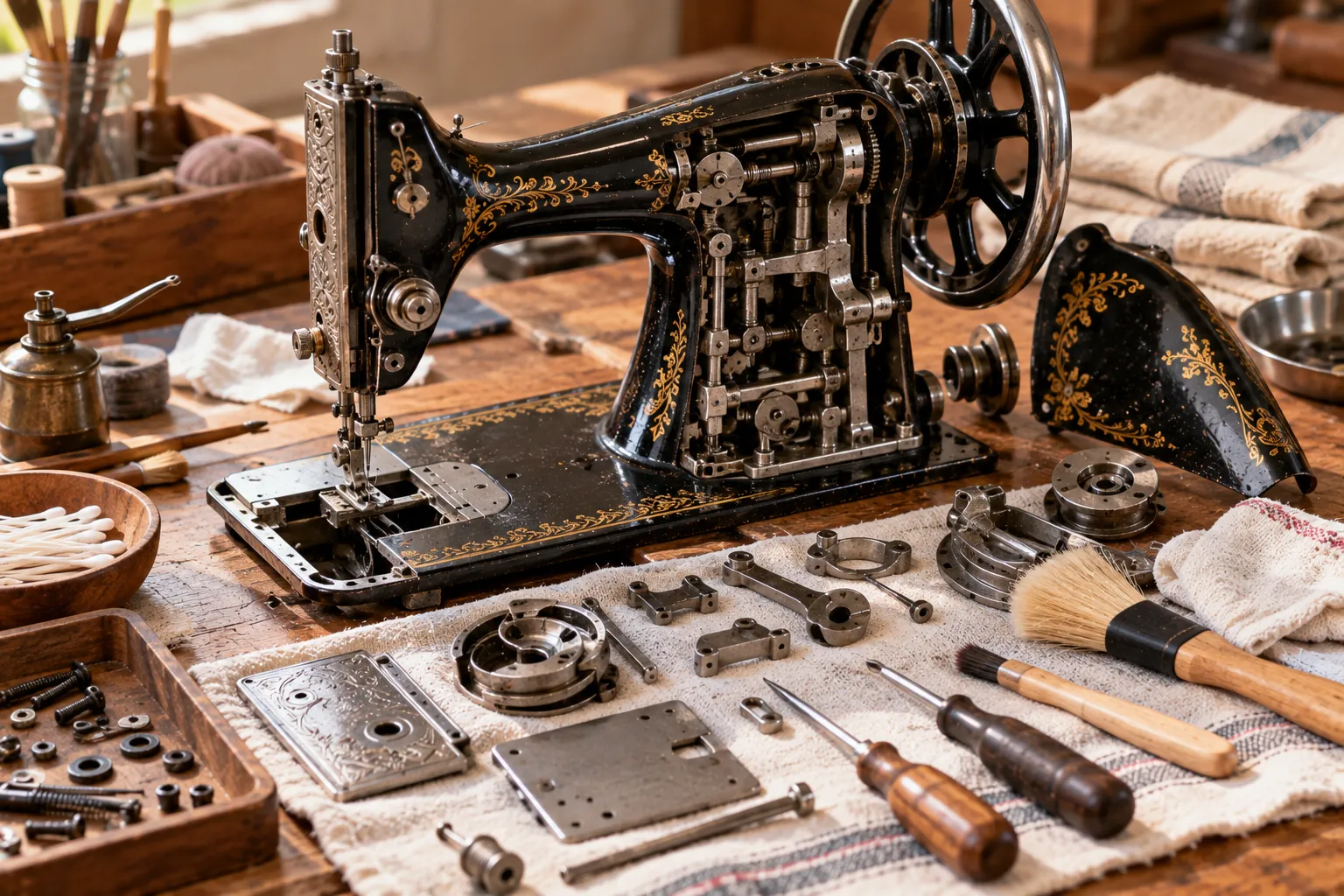
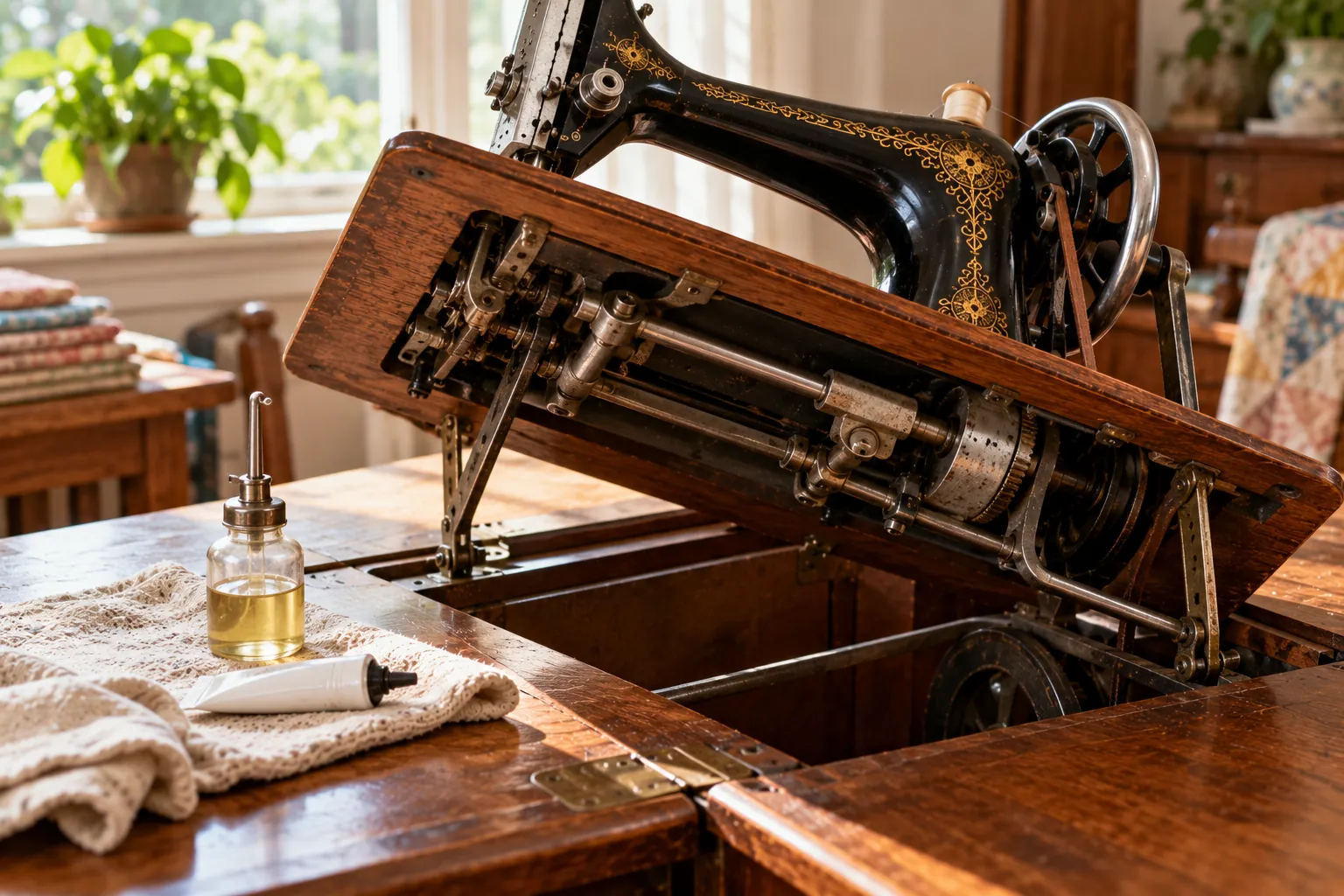
Old Singers that have stood for years are often locked by dried oil. The ISMACS NeedleBar guide recommends kerosene as a penetrating cleaner, applied to every joint, and gentle heat from a hair dryer until parts are hot to the touch, then working the handwheel back and forth a little more each time. Its key rule: at no time force the machine. Leave it overnight if needed, and keep kerosene off the paint. Then clean and oil properly (clean and oil guide).
Problem 4Handwheel turns but the needle doesn’t move
The handwheel has a stop-motion knob that disconnects it from the needle for bobbin winding. If it was loosened and not retightened, the motor or handwheel spins without sewing. Hold the handwheel and tighten the knob away from you.
When to stopWhen to call a sewing machine technician
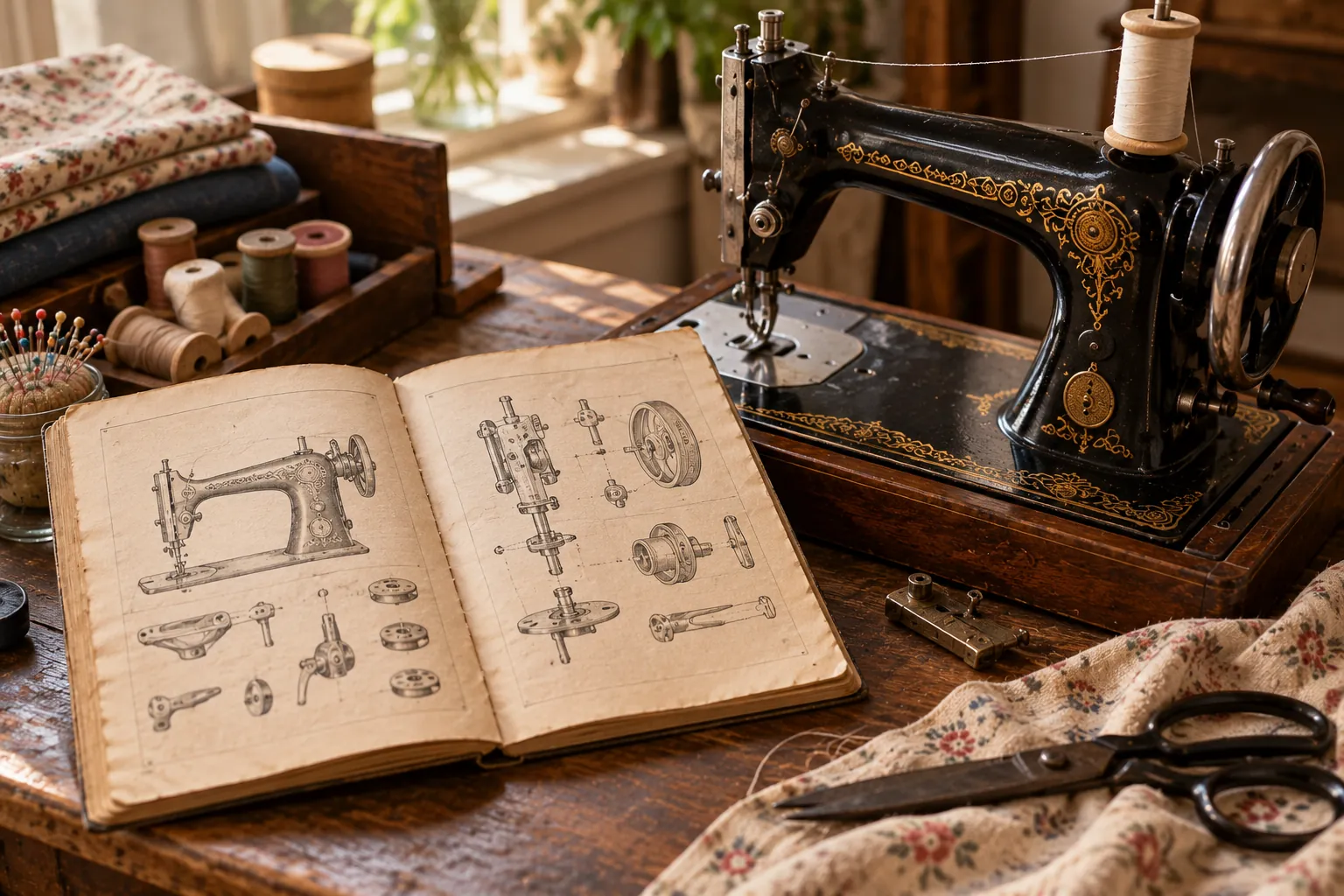
If the needle hits the hook or plate after you’ve checked the needle, the hook timing may be out. Cracked wiring, a motor that smells hot or sparks, broken gears and seized parts that won’t free also need a technician. Adjuster’s manuals exist for models such as the 201, but timing is easy to make worse.
QuestionsFrequently asked questions
Why is my old Singer sewing machine not sewing?
Check that the stop-motion knob is tight, the needle is in correctly, the machine is threaded with the foot up, and the bobbin is inserted correctly.
How do I fix a vintage sewing machine that won’t turn?
Don’t force it. Clean and penetrate with kerosene, apply gentle heat, and work the handwheel a little at a time.
Why does my Singer keep breaking needles?
Usually pulling the fabric while sewing, a loose presser foot, or the needle not fully up in the clamp.
Can I service a vintage Singer myself?
Cleaning, oiling, threading and tension, yes. Timing, motor and wiring repairs are best left to a technician.
ReferencesSources
These are the pages and manuals the facts in this article come from. Where they disagree, we say so in the text.
- ismacs.net/needlebar/main/manuals/221k/index5.html
- sewguide.com/thread-bunches-up-under-the-fabric
- ismacs.net/needlebar/main/restoration/seized
- ismacs.net/needlebar/main/manuals/singer201/index2.html
- ismacs.net/needlebar/main/manuals/singer201/index4.html
- singer-featherweight.com/blogs/blog/getting-to-know-your-featherweight-part-3
- ismacs.net/singer_sewing_machine_company/manuals/singer-model-201-1200-sewing-machine-adjusters-manual.pdf
Published 24 October 2026 · Written and fact-checked by the HeirloomID editors. Spotted an error? Tell us.