Key points
- Test every cleaner on a hidden area first.
- Alcohol, acetone, thinners and household cleaners can whiten shellac or silver decals.
- Don’t lacquer the japanning; ISMACS says “Replating always looks wrong.”
- Treat rust locally and gently; never soak decorated parts.
- Rewire perished cords before you plug in.
The planA restoration plan in six steps
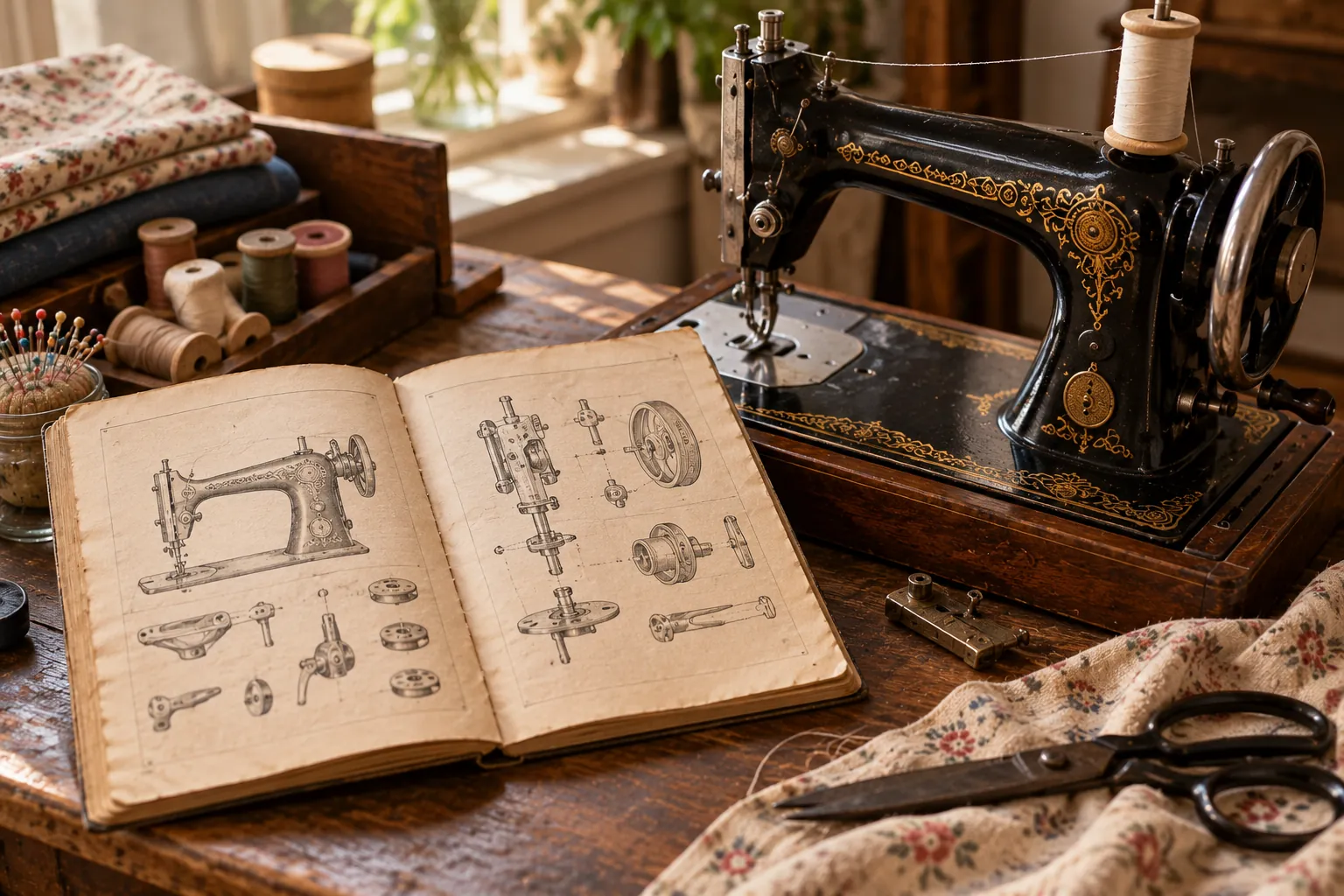
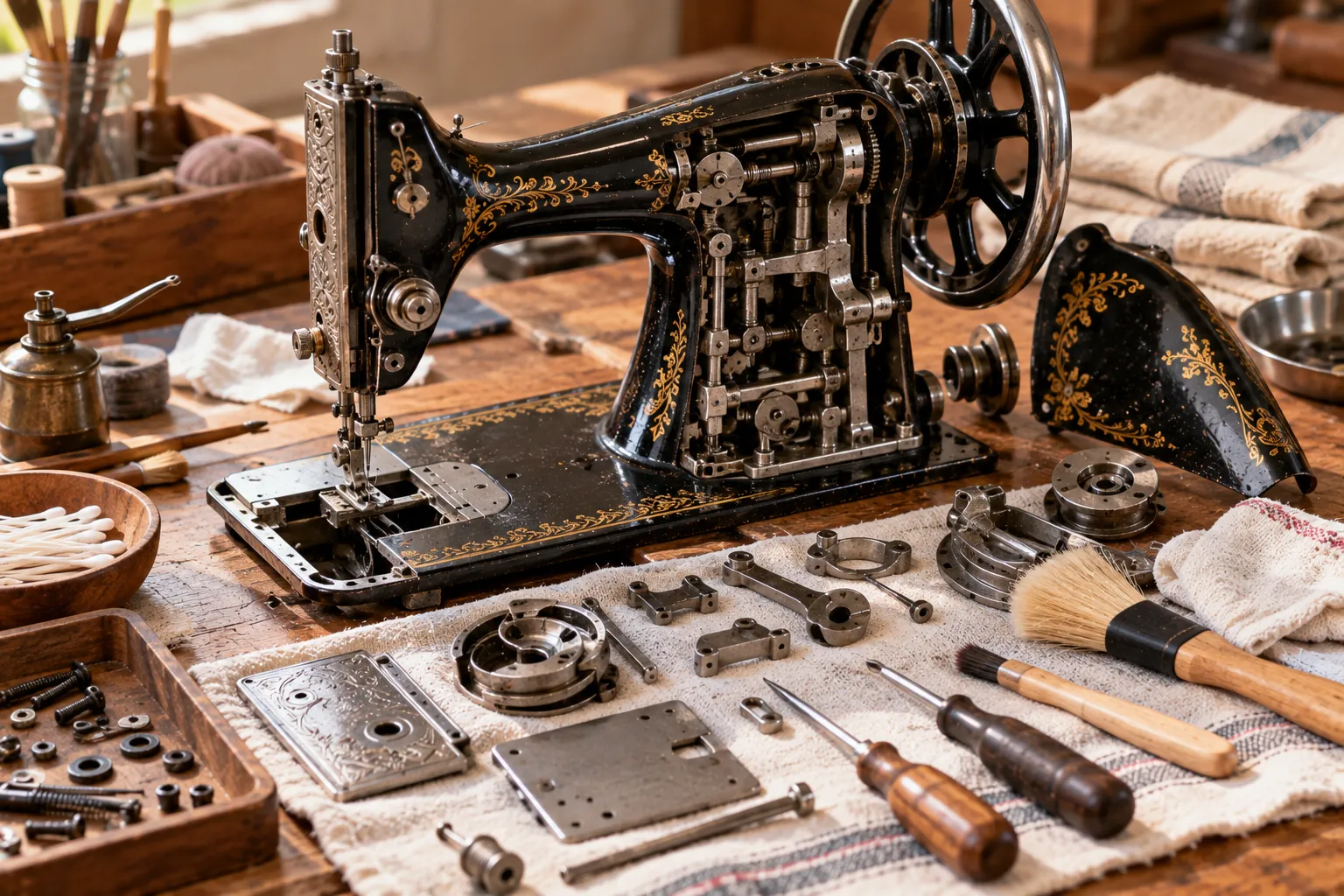
- Assess. Identify the model (identifier) and date it (lookup). Photograph everything before taking it apart.
- Free and clean the mechanism. Brush out lint. If parts are stiff, use kerosene and gentle heat; ISMACS says never force it (seized machines).
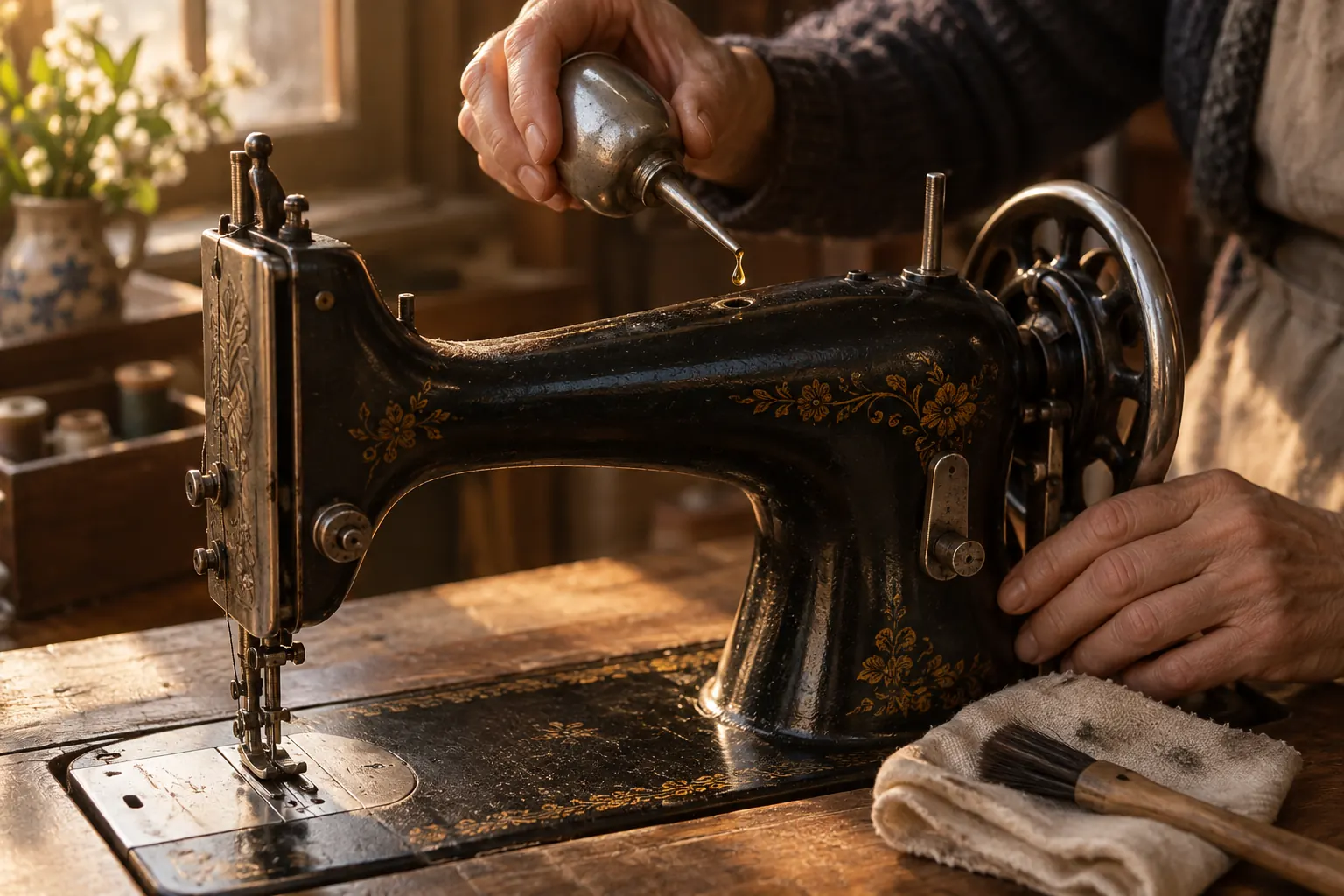
- Oil and lubricate every point (which oil).
- Clean the finish gently (below).
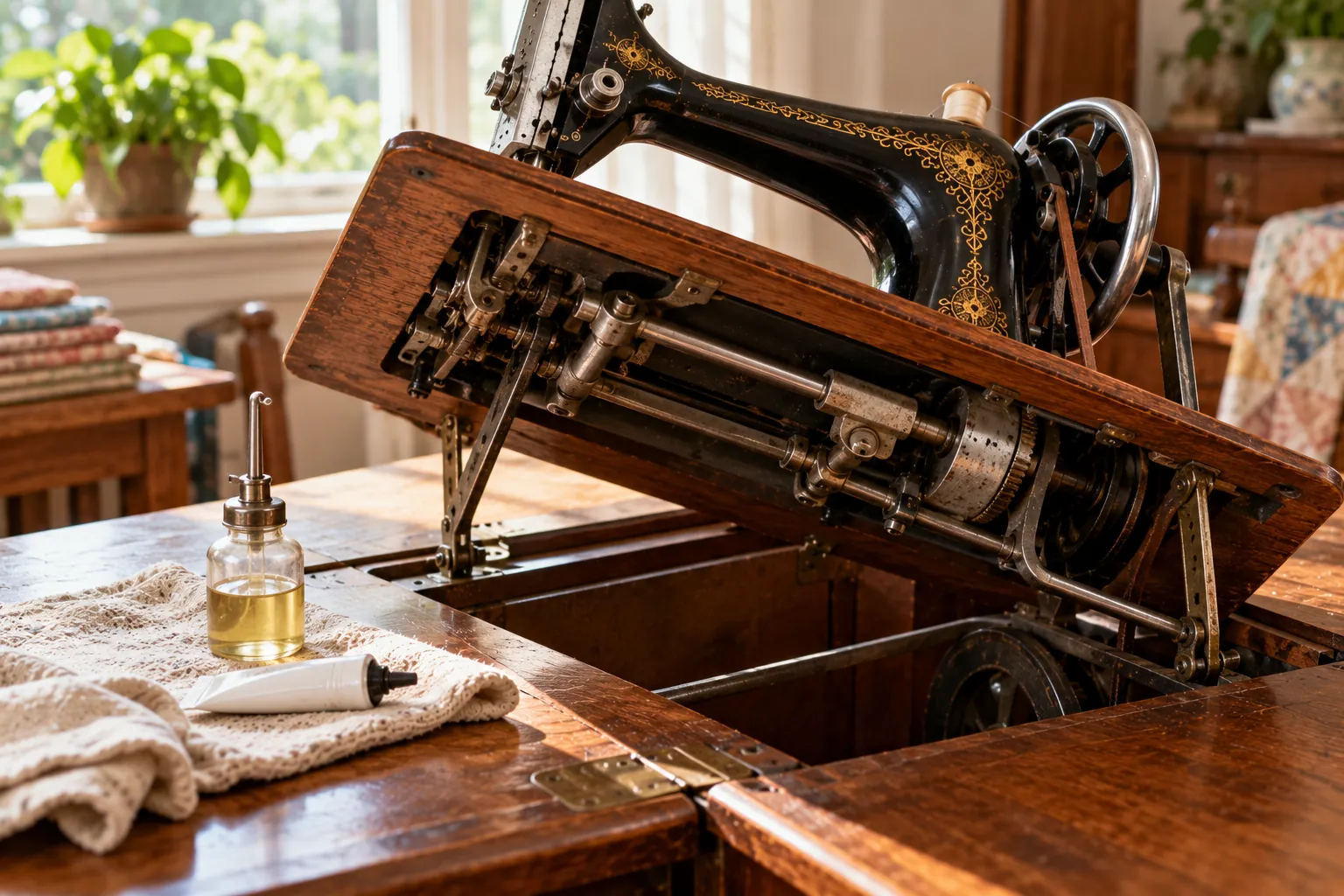
- Make it safe: replace cracked wiring (motors and pedals).
- Adjust and test: new needle, tension, test seam.
FinishCleaning the japanning and decals safely
The black finish on older Singers is baked japanning with gold transfer decals under varnish or shellac. ISMACS’s care guide says to test cleaners on the underside first, that acetone, solvents and thinners are not safe, and that no lacquer should be applied to japanned surfaces. Where the varnish is crazing, sometimes dusting is all that is safe. Collectors and restorers widely use plain sewing machine oil on a soft cloth as the mildest cleaner. A collectors’ group warns that many chemical cleaners turn the gold decoration silver. Our clean and oil guide has more detail.
Bright metalNickel plating and rust
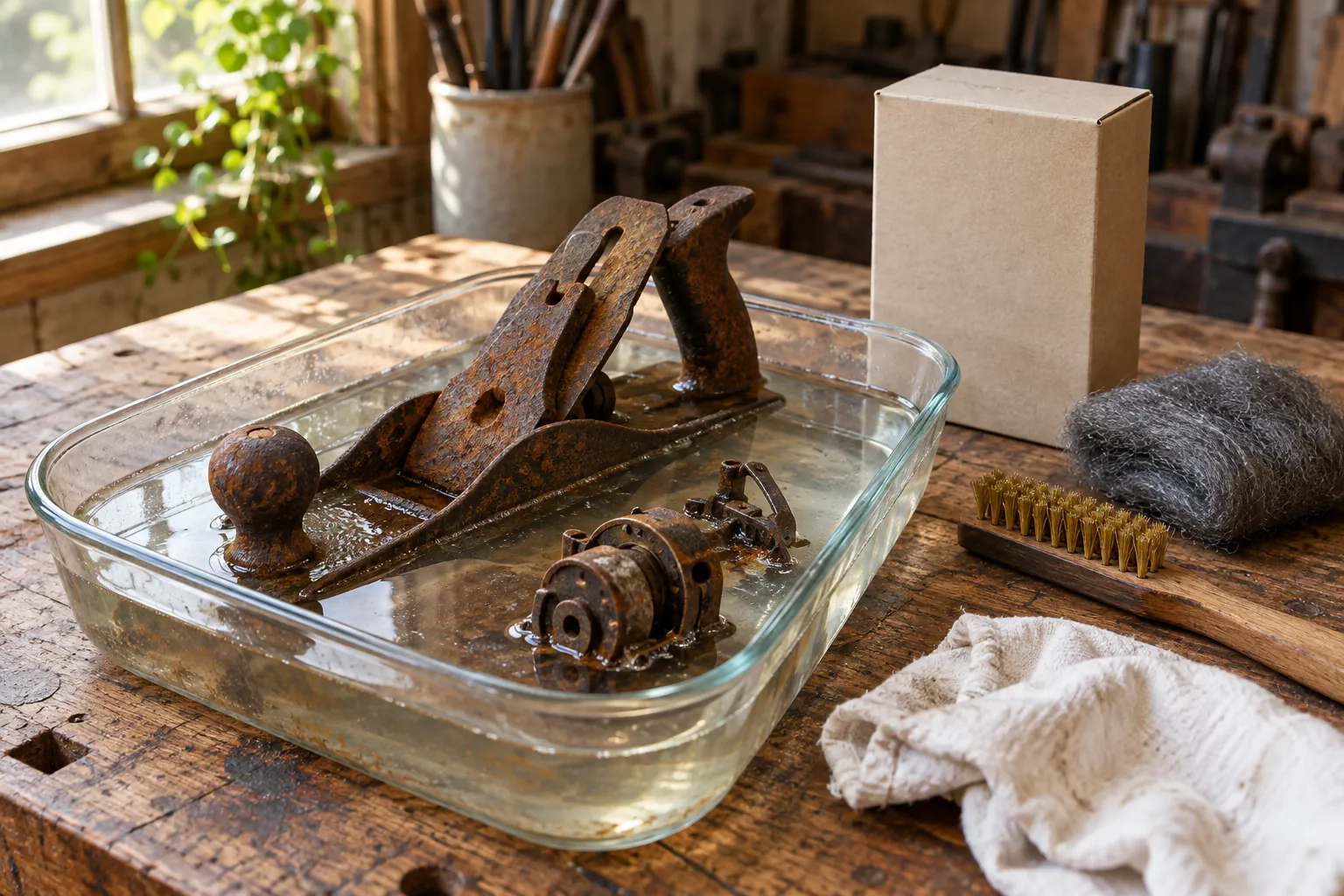
ISMACS warns that plated steel can rust under the plating, leaving a fragile bubbly surface, and that aggressive wire wool or emery does irreversible damage; it recommends a solvent first, then a mild metal polish, and says replating always looks wrong. The Canadian Conservation Institute similarly advises protecting painted and decal surfaces and rubbing light rust gently with 0000 steel wool and a few drops of oil. See rust removal.
Don’tWhat not to do
- Don’t repaint or strip the japanning.
- Don’t replate nickel parts.
- Don’t use alcohol, ammonia, citrus or household sprays on the finish.
- Don’t soak decorated parts in vinegar or rust remover.
- Don’t put oil in the motor.
- Don’t discard original parts; bag and label them.
Replacement decals and full repaints exist, and are fine on a machine you’ll use, but they turn an original machine into a restored one.
QuestionsFrequently asked questions
How do I clean an old Singer sewing machine without damaging the decals?
Test on a hidden spot and use the mildest cleaner, usually sewing machine oil on a soft cloth. Avoid alcohol, solvents and household cleaners.
Can I repaint my vintage Singer?
You can, but it removes originality and value. Consider cleaning and preserving instead.
How do I remove rust from a vintage sewing machine?
Treat it locally: fine steel wool or a fine abrasive pad with a little oil. Never soak painted or decorated parts.
Is it worth restoring an old Singer?
Usually yes as a user machine; most need cleaning, oil and sometimes wiring. Check value first if it may be rare.
ReferencesSources
These are the pages and manuals the facts in this article come from. Where they disagree, we say so in the text.
- ismacs.net/sewing_machine_articles/the_care_of_sewing_machines.html
- ismacs.net/needlebar/main/restoration/seized
- www.canada.ca/en/conservation-institute/services/conservation-preservation-publications/canadian-conservation-institute-notes/care-iron.html
- www.nationalsewingcircle.com/post/rehab-vintage-sewing-machines
- ismacs.net/sewing_machine_articles/japanning.html
- pungolivinghome.com/home-2/topics-tips-and-tricks/cleaning-a-vintage-black-singer-sewing-machine-what-to-use-and-not-use
Published 24 October 2026 · Written and fact-checked by the HeirloomID editors. Spotted an error? Tell us.