Key points
- Clean gently; re-japanning or mismatched parts lower a plane’s value.
- Flatten the sole with the iron in place (but retracted), so the body is under working tension.
- Bailey bench planes bed the iron at 45°.
- Chipbreaker: about 1/64 in or closer for tear-out control.
- Advance the depth wheel in one direction to take up backlash.
PartsParts of a Bailey-pattern hand plane
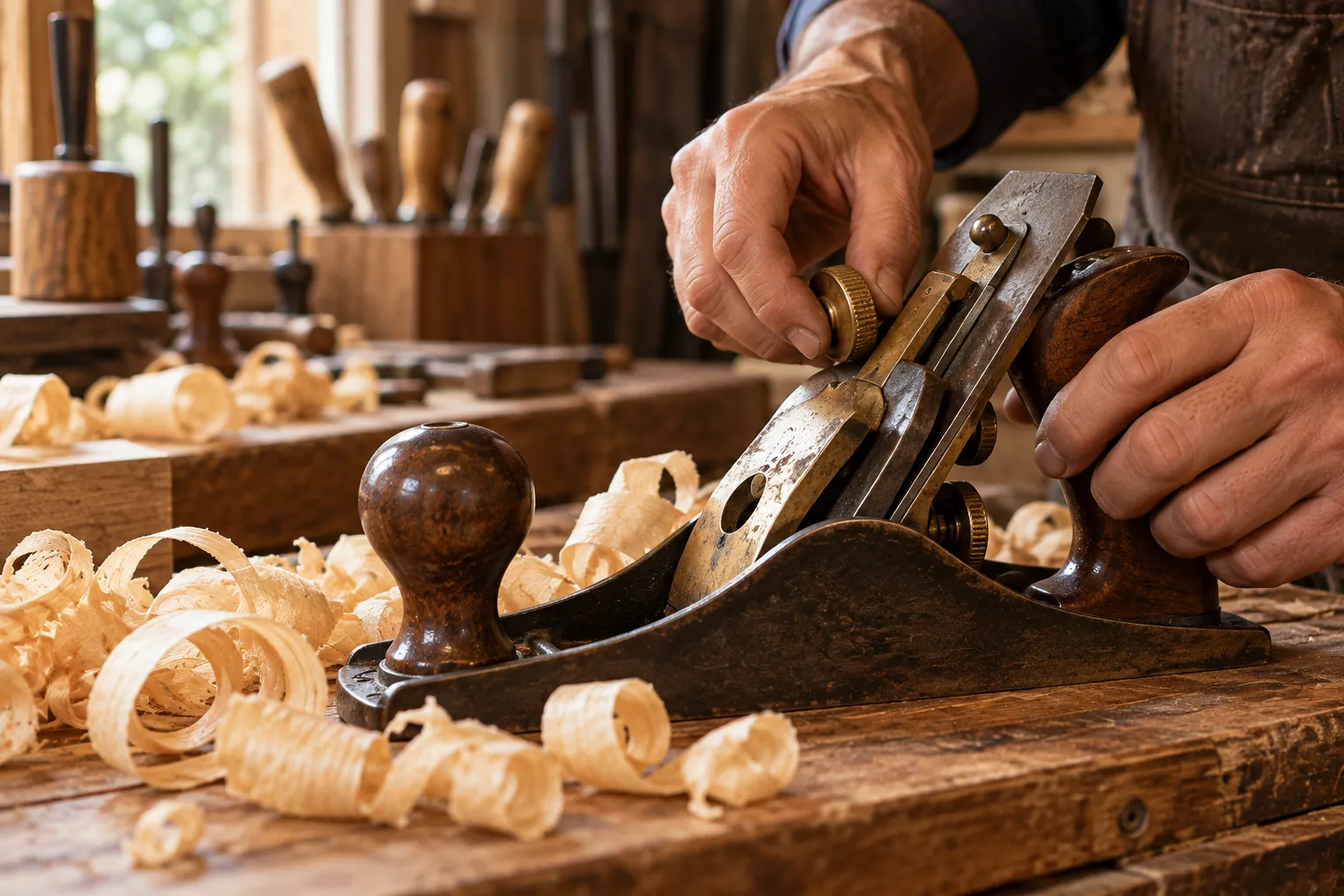
Leonard Bailey’s 1867 design, made by Stanley for a century, has a cast-iron body (sole), a frog on which the iron rests at 45°, the iron (blade) with its chipbreaker (cap iron), a lever cap that clamps them, a brass depth-adjustment wheel, a lateral adjustment lever (from Type 5, 1885–88) and a wooden tote and knob. Knowing these names makes the rest easier. Date yours with our type study.
RestoreStep-by-step restoration and setup
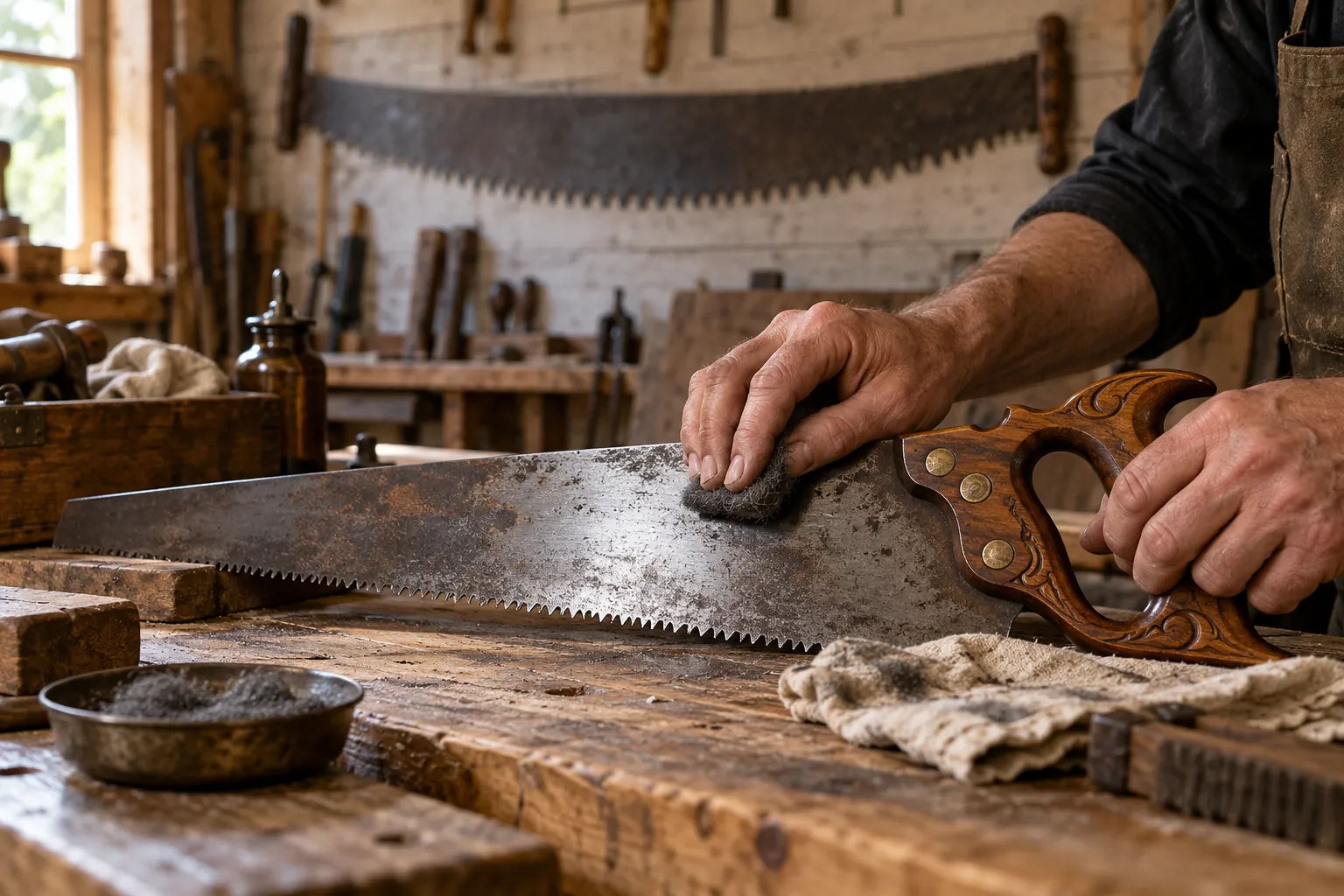
- Dismantle and clean. Remove light rust with fine steel wool or a fine abrasive pad and a little oil; a citric acid bath can derust bare parts (see rust removal). Leach notes re-japanning and replacement parts that don’t match the plane’s vintage reduce collector value.
- Flatten the sole. Make’s method: tape 100–220 grit wet-and-dry paper to thick glass or granite, lubricate it, and rub the sole until shiny spots show the high areas are gone. Keep the blade installed but retracted so the casting is under its working tension. Finish at 220 and wax the sole.
- Set the frog. Fine Woodworking: heavier cuts need a larger mouth opening, lighter cuts a smaller one. On Bailey planes you remove the blade to reach the frog screws; Bed Rock frogs adjust from the rear.
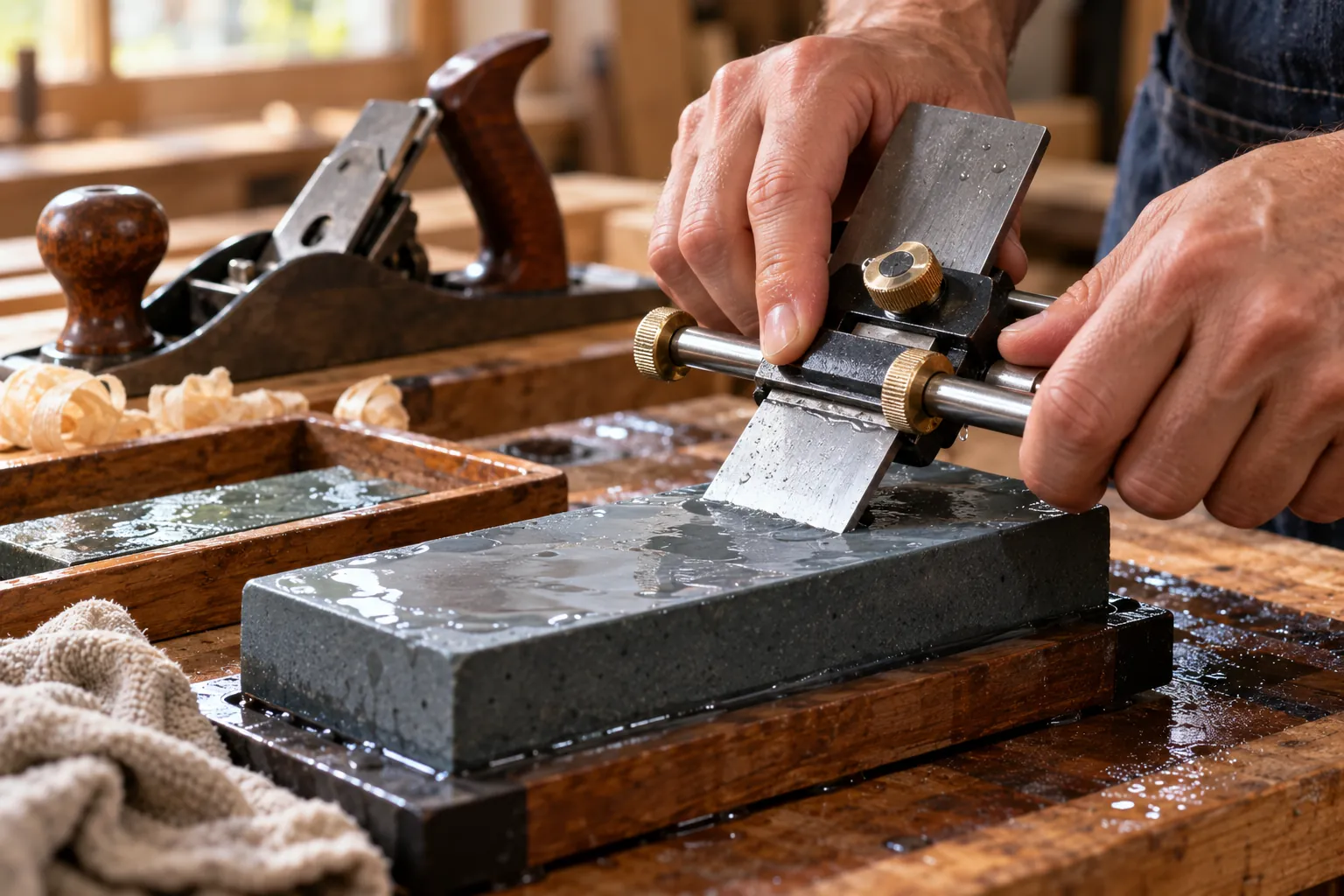
- Sharpen the iron (how to sharpen).
- Fit the chipbreaker. It must sit flat against the iron with no gap, or shavings jam the mouth. Popular Woodworking’s Wilbur Pan sets the edge 1/64 in to 1/128 in back from the cutting edge to control tear-out; wrinkled shavings mean it is too close.
- Adjust. Sight down the sole, advance the iron with the depth wheel until it just shows, and centre it with the lateral lever. Back off and advance again in the same direction to take up the wheel’s backlash.
TestHow to know it is working
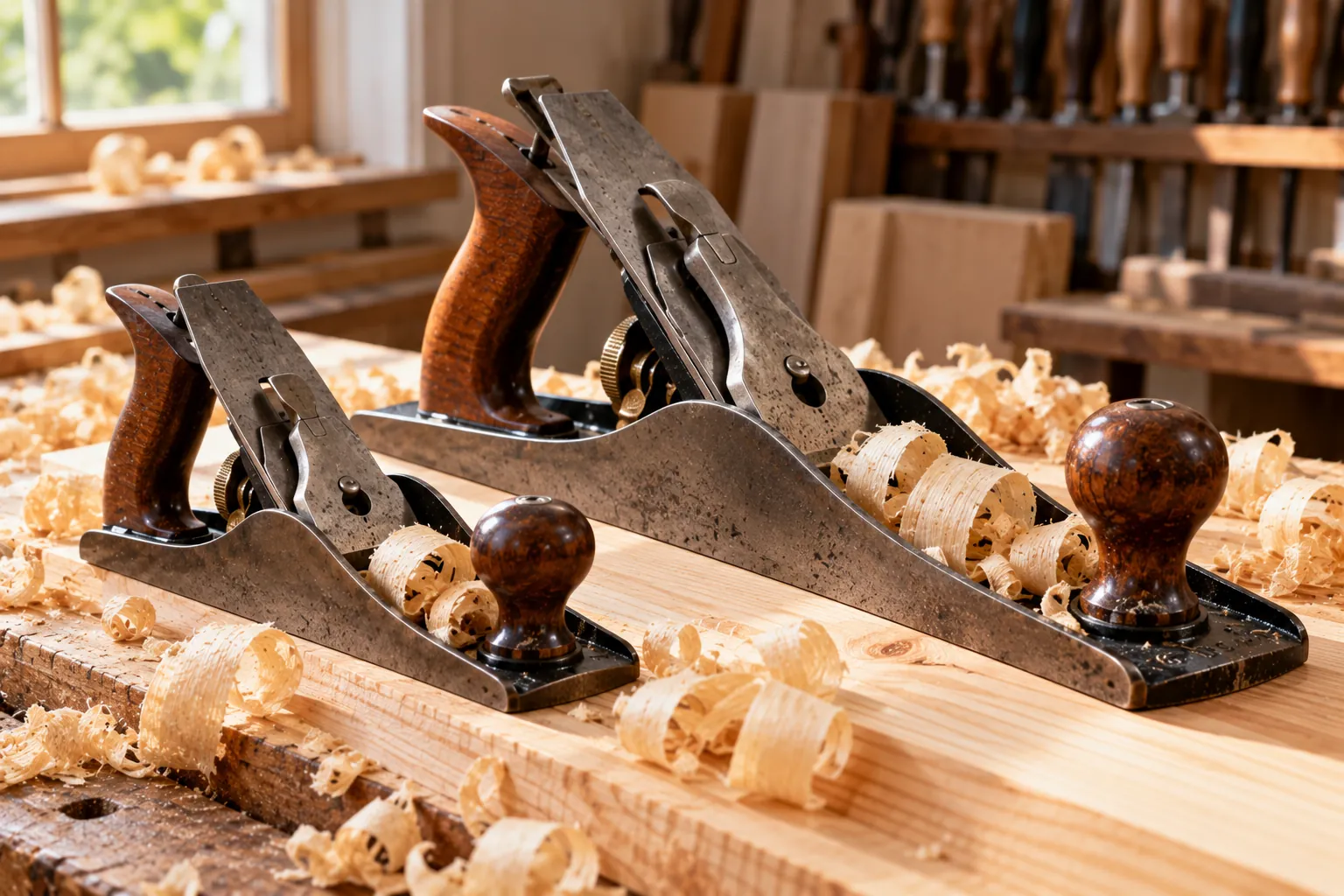
On a straight-grained board you should get thin, full-width shavings without the plane chattering. If it tears out, close the mouth, move the chipbreaker closer or skew the plane. If it won’t cut, the iron is dull or retracted too far.
Which planeWhich plane are you restoring?
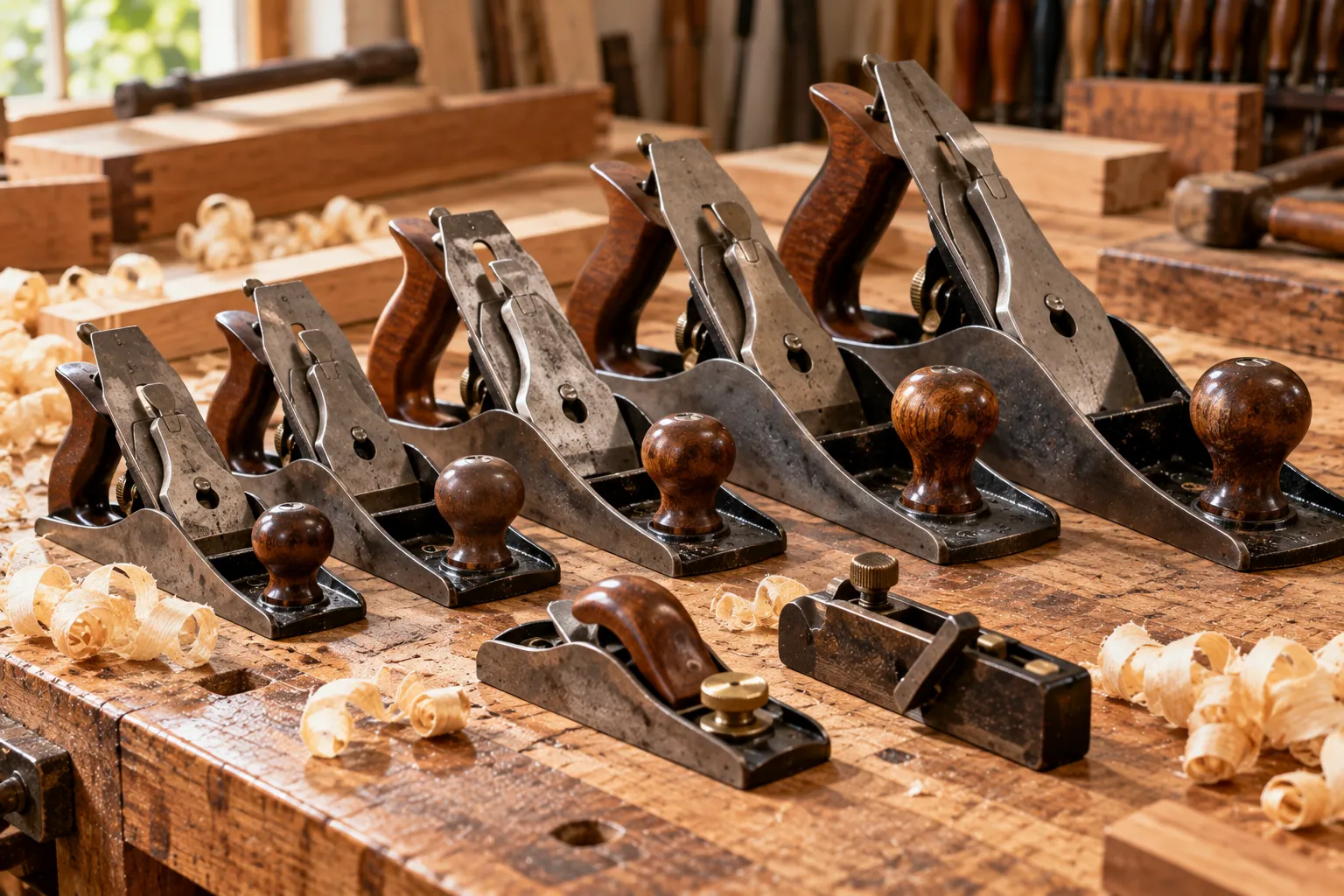
Stanley numbered its bench planes by size, from the tiny No. 1 to the 24-inch No. 8. See types of hand planes and our pages for each size, such as the No. 4 and No. 5.
QuestionsFrequently asked questions
How do you restore an old Stanley plane?
Dismantle, clean rust gently, flatten the sole, set the frog, sharpen the iron, fit the chipbreaker and adjust.
Should I repaint the japanning on an old plane?
Collectors value original japanning; re-japanning lowers value. For a user plane it is a personal choice.
How flat does a plane sole need to be?
Flat around the mouth, toe and heel is what matters for most work; you don’t need a mirror finish.
What angle is a Stanley bench plane iron bedded at?
45°, known as common pitch.
ReferencesSources
These are the pages and manuals the facts in this article come from. Where they disagree, we say so in the text.
- lemelson.mit.edu/resources/leonard-bailey
- www.handplane.com/45/perfect-pitch-bedding-angles-explained
- makezine.com/article/workshop/woodworking/skill-set-tuning-planes-and-chisels
- www.finewoodworking.com/project-guides/handplanes/handplaning-101
- www.popularwoodworking.com/techniques/chipbreaker-theory-use
- popularwoodworking.com/techniques/improve-hand-plane-performance
- www.hyperkitten.com/tools/stanley_bench_plane/type_study.php
- supertool.com/StanleyBG/stan0a.html
- www.woodcentral.com/forums/topic/3062534/a-question-about-backlash-in-stanley-planes
- www.popularwoodworking.com/editors-blog/remove-too-rust-with-citric-acid
Published 24 October 2026 · Written and fact-checked by the HeirloomID editors. Spotted an error? Tell us.