Key points
- Date first: medallion, etch and handle; 1928 is a key dividing line.
- Apple handles until about 1945; later beech and other woods.
- Common models (No. 7, D-8, D-23) are good users rather than rarities.
- Avoid vinegar and acid baths on saws: they can darken the plate and remove the etch.
- Sharpening: setting, jointing, filing and stoning.
FirstDate and identify the saw
The Disstonian Institute dates Disston saws mainly by the medallion and handle: eagle medallions from the 1840s–60s, “one son” from 1865 to 1871, “& Sons” from 1871, the “27” added in 1888, and smaller medallions in 1953–55. It calls 1928 the major dividing line, when model names took a “D-” prefix. Our Disston saw identification guide covers the details.
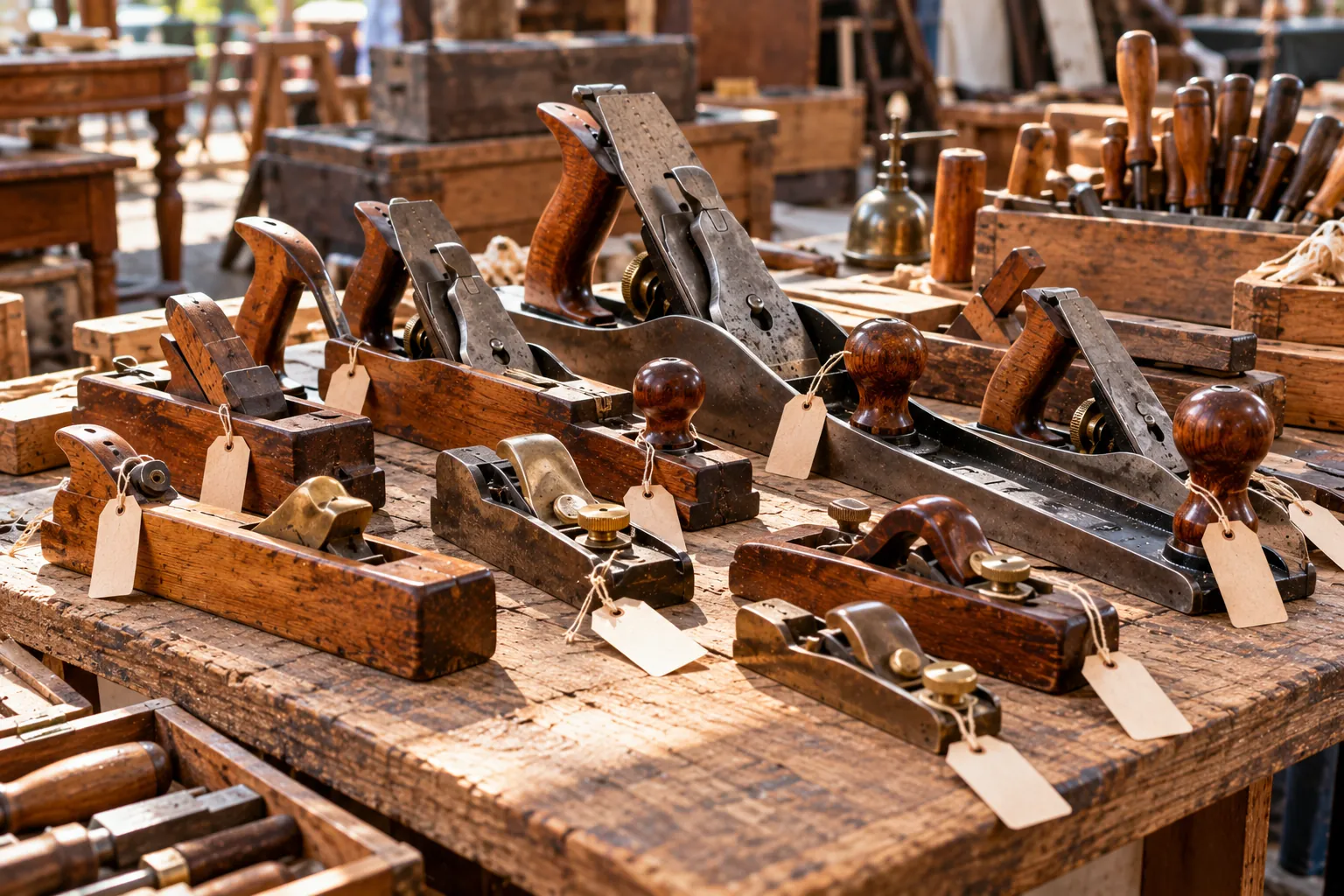
ValueWhat is a Disston saw worth?
| Model | Disstonian Institute note |
|---|---|
| No. 7 | Beech handle; commonly found, the basic Disston model for decades |
| No. 12 | Carved apple handle; less common, but not hard to find |
| D-8 | Common, high-quality saw; skewback blade |
| D-23 | Very common, good user saw |
Value rises with age, an apple handle (used until about 1945), a crisp etch, a straight plate, unbroken horns and original saw nuts; it falls with pitting, kinks, cracked handles and replaced nuts. Compare recent sold prices for the same model and period.
RestoreHow to restore a Disston saw
- Remove the handle (note how the nuts came out).
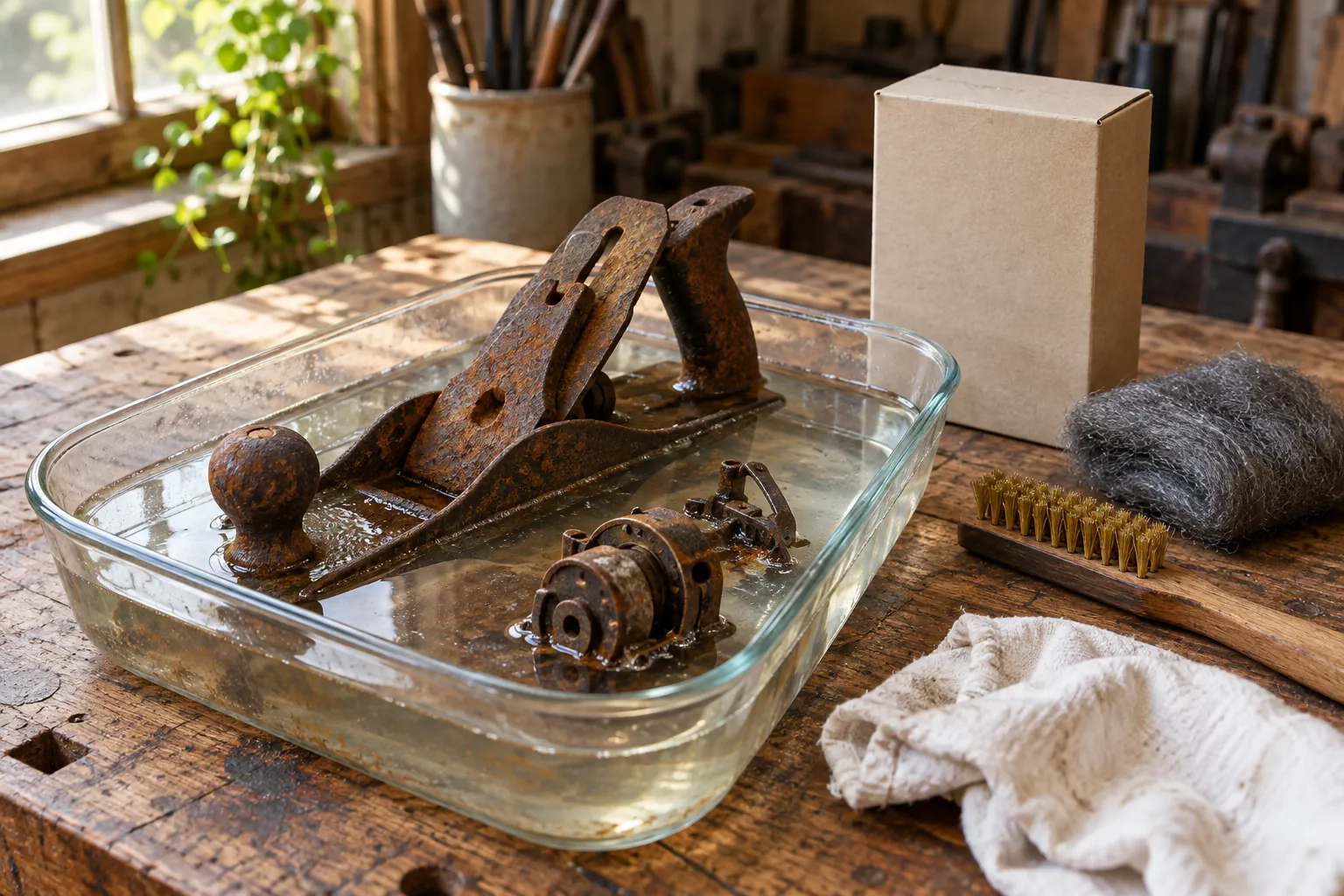
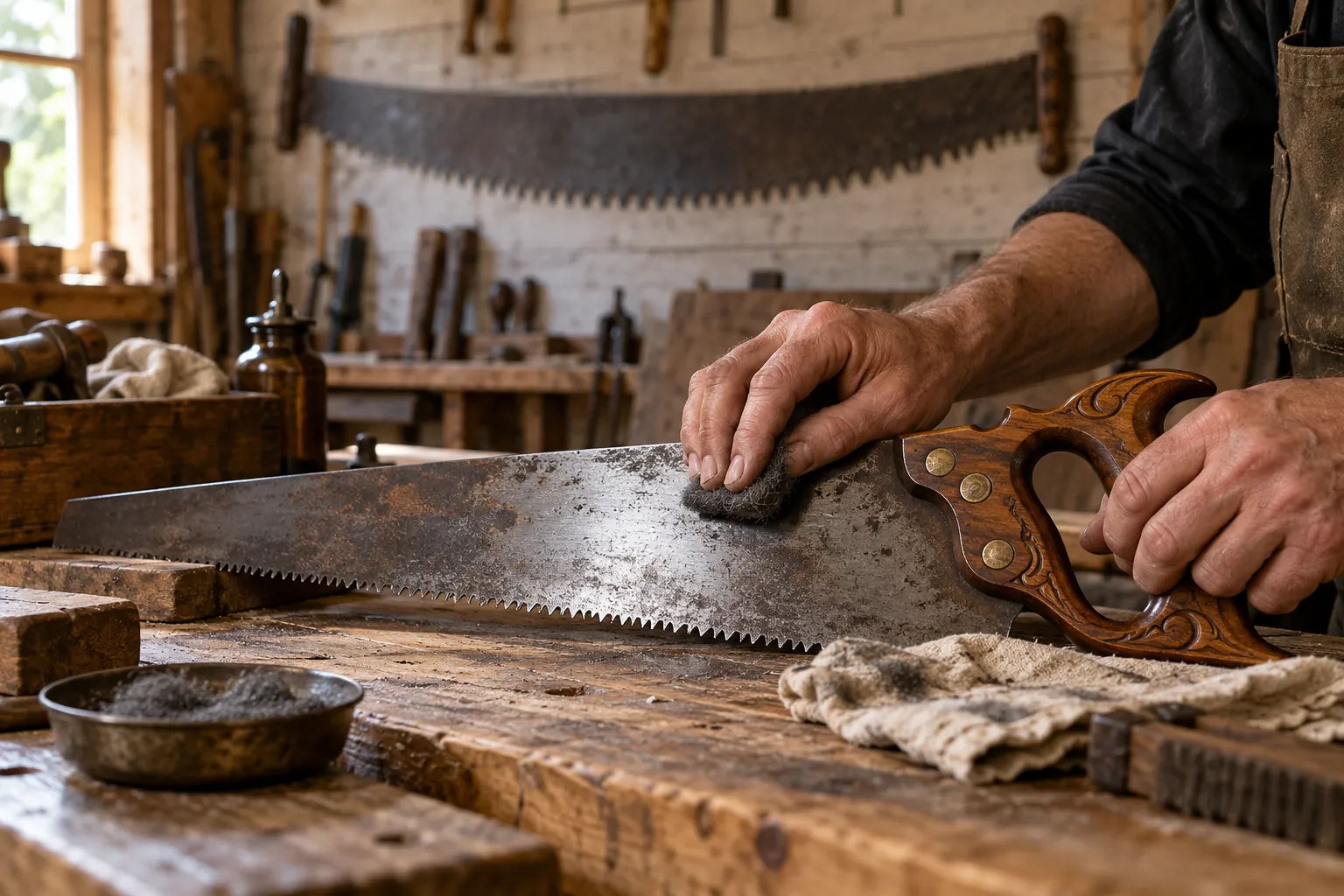
- Remove rust gently. Joe Foster of GrowIt BuildIT scrapes with a razor blade, then sands with 400-grit wet-and-dry on a hard block with lubricant; aggressive sanding can remove the etch. He strongly advises against vinegar, citric acid and chelating baths on saws. Forum restorers sand only on a flat block, because freehand sanding lightens the etch.
- Refinish the handle: strip, sand to 220 and oil (dispose of oily rags safely).
- Wax the plate and reassemble.
SharpenSharpening an old hand saw
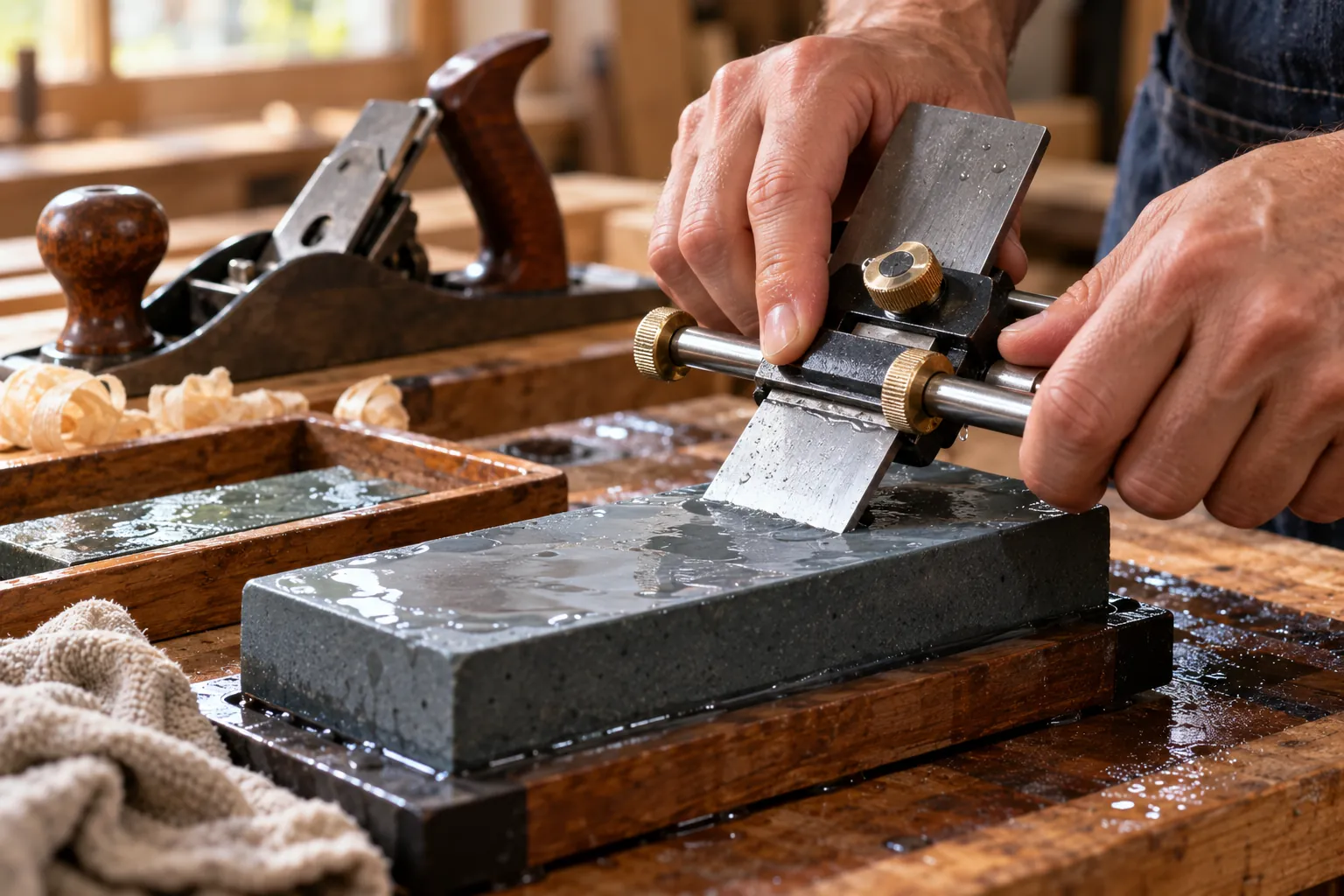
Matt Cianci, writing in Popular Woodworking, lists the four critical steps to sharpening any handsaw: setting, jointing, filing and stoning. Most rip saws have 5° to 10° of rake; crosscut teeth about 15° of rake and 15–25° of fleam. If you are new to it, practise on a common saw first.
Two-man sawsAntique two-man crosscut saws
Two-man crosscut saws come as felling saws (generally less stiff) and bucking saws. Wikipedia notes vintage saws are much sought after by professionals and cost more than modern ones, and that a Forest Service study found them increasingly difficult to locate. Decorative wall-hanger saws with heavy pitting are worth much less than straight, usable ones.
QuestionsFrequently asked questions
How do I know how old my Disston saw is?
Read the medallion, the etch and the handle shape; the Disstonian Institute’s dating guide covers each period.
Are Disston saws worth anything?
Most are affordable user saws. Early, rare or excellent examples with apple handles and crisp etches are worth more.
Can I use vinegar to clean a Disston saw?
Restorers advise against it: acid can darken the plate and remove the etch. Use fine abrasive on a flat block.
What is an antique two-man saw worth?
It depends on type, condition and straightness; usable saws are sought after by professionals, pitted wall-hangers much less.
ReferencesSources
These are the pages and manuals the facts in this article come from. Where they disagree, we say so in the text.
- www.disstonianinstitute.com/medallionpage.html
- disstonianinstitute.com/dating.html
- disstonianinstitute.com/etch.html
- disstonianinstitute.com/d8page.html
- disstonianinstitute.com/d23page.html
- disstonianinstitute.com/quickglance.html
- growitbuildit.com/restoring-saw-remove-rust
- www.woodcentral.com/forums/topic/3056450/etch-brightening-and-saw-length-questions
- popularwoodworking.com/tools/saw-sharpening-101
- en.wikipedia.org/wiki/Crosscut_saw
- en.wikipedia.org/wiki/Henry_Disston
Published 24 October 2026 · Written and fact-checked by the HeirloomID editors. Spotted an error? Tell us.