Key points
- Cabinet value depends on rarity, wood, condition and whether the machine is with it.
- Singer numbered its cabinets: No. 40, 46 and 51, for example, each fit specific machines.
- The No. 68 Featherweight cabinet is rare: ISMACS reports only 12 or 13 known.
- A treadle base can become a table with four screws, but painting it reduces originality.
ValueWhat is an old Singer sewing machine table worth?
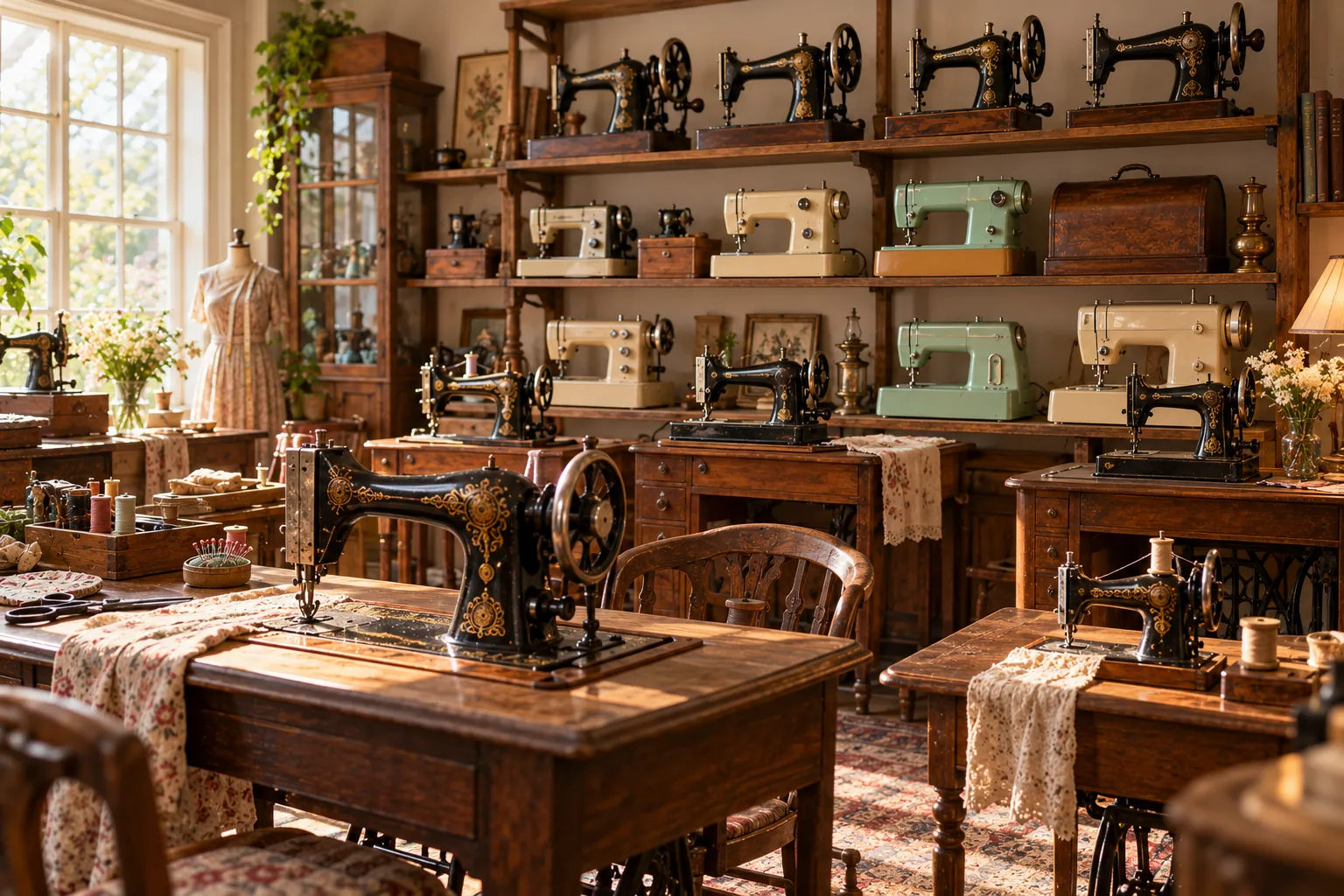
ISMACS notes that a pretty machine with a beautiful cabinet may well have decorative value. Most treadle tables and drop-head cabinets, though, were made in very large numbers. Condition of the wood, original drawers and hardware, the treadle irons and whether the original machine is still with it all matter. Check sold prices for your cabinet style with our sold-price finder.
IdentifyWhich Singer cabinet do you have?
singersewinginfo lists Singer’s numbered cabinets and which machines they fit: for example the No. 40 (about 1926) with extension tables at both ends fits the 15, 66 and 101; the enclosed No. 46 fits the 15, 66 and 127; the No. 51 fits the 15, 66 and 201. Our tables and cabinets guide covers the common numbers and how to date them.
Rarest of all is the No. 68, designed for the Featherweight. ISMACS reports 12 or 13 known and one offered for $2,500. Featherweight card tables are also somewhat rarer than the machines.
IdeasRepurposing ideas for an old sewing machine table
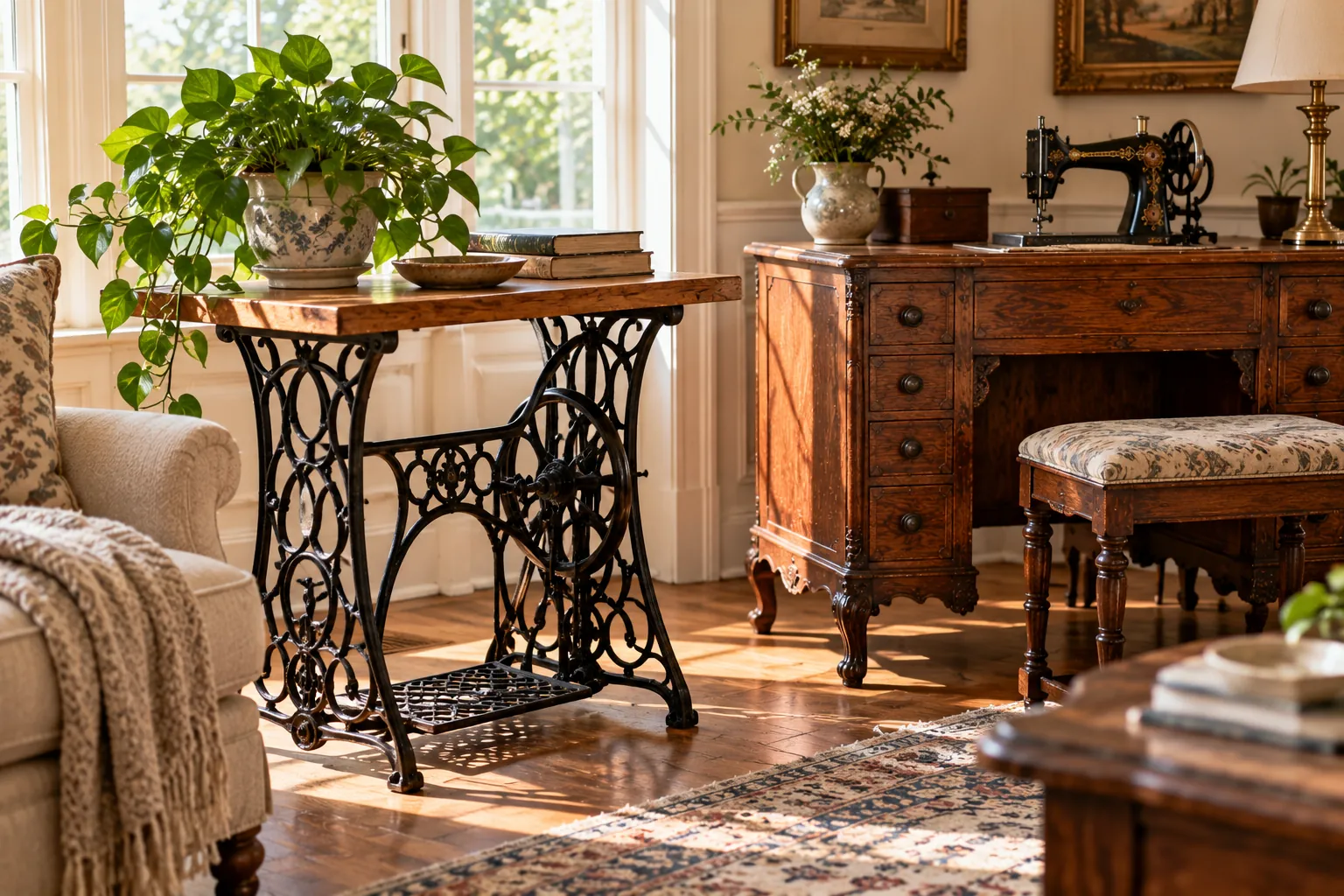
- Treadle-base side or hall table. One restorer notes that just four large screws hold a Singer treadle to the wooden cabinet, so the base can carry a new top.
- Desk or vanity. Drop-head cabinets close flat and make compact desks with the head left inside.
- Plant stand or bathroom vanity base. Popular with treadle irons.
- Drawers. Small cabinet drawers become wall boxes or organisers.
Before you startDon’t destroy a collectable
Check what you have first. Identify the cabinet and the machine, and look up the serial number. If it is rare or complete, sell it to someone who will use it and repurpose a common one instead. When a treadle base was painted in one repurposing project, a reader commented that it took away from the originality of the Singer irons. Keep removed parts together; someone restoring a treadle will want them.
QuestionsFrequently asked questions
Is an old Singer sewing machine cabinet worth anything?
Usually a modest amount, more for fine wood, complete drawers and the original machine. Rare cabinets such as the No. 68 are worth much more.
How do I identify my Singer cabinet?
Measure it, note the drawers and extension leaves, and compare with Singer’s numbered cabinets in our cabinets guide.
Can I remove the sewing machine from the cabinet?
Yes. The head is held by hinge screws at the back; support it as you lift it out.
Should I paint an old treadle base?
Painting lowers originality and appeal to collectors. Clean and wax it instead if it might ever be sold.
ReferencesSources
These are the pages and manuals the facts in this article come from. Where they disagree, we say so in the text.
- ismacs.net/sewing_machine_articles/how_much_is_my_sewing_machine_worth.html
- www.singersewinginfo.co.uk/tables
- ismacs.net/singer_sewing_machine_company/featherweight_fever_those_elusive_featherweight_cabinets_and_tables.html
- ismacs.net/singer_sewing_machine_company/mystery-of-the-singer-model-68-sewing-machine-cabinet.html
- www.myrepurposedlife.com/repurposed-singer-sewing-machine
- ismacs.net/singer_sewing_machine_company/singer_sewing_machine_cabinets.html
Published 24 October 2026 · Written and fact-checked by the HeirloomID editors. Spotted an error? Tell us.